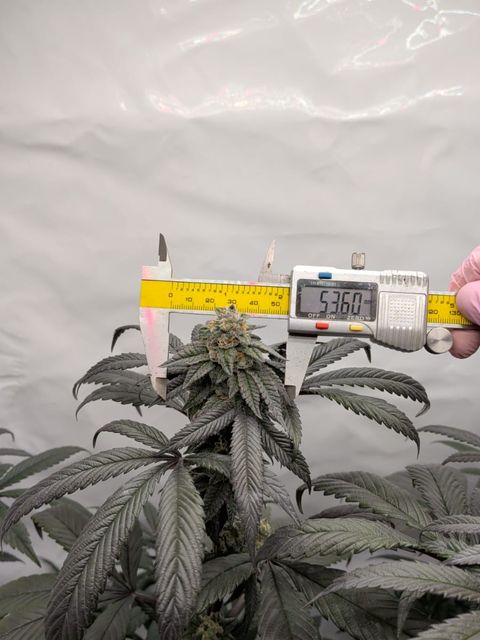
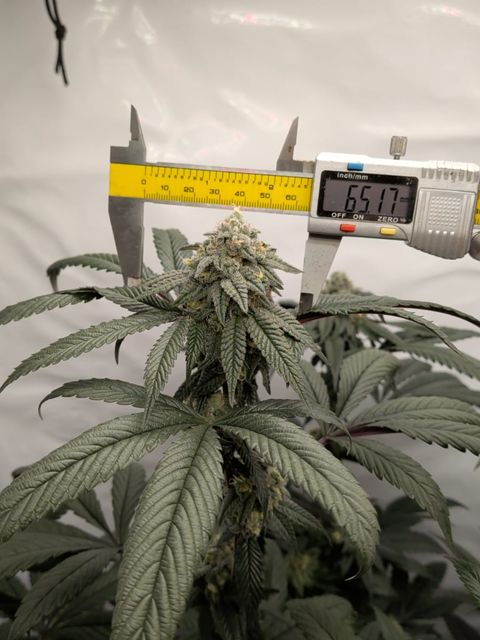
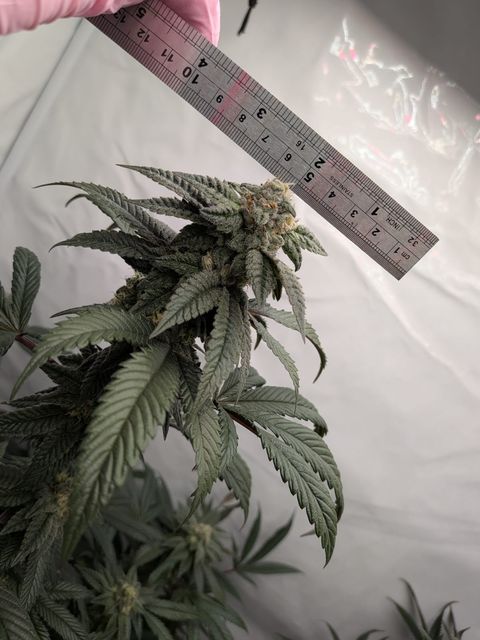
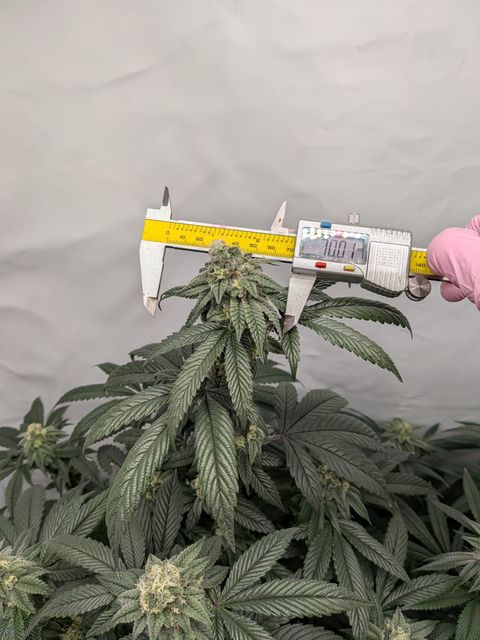
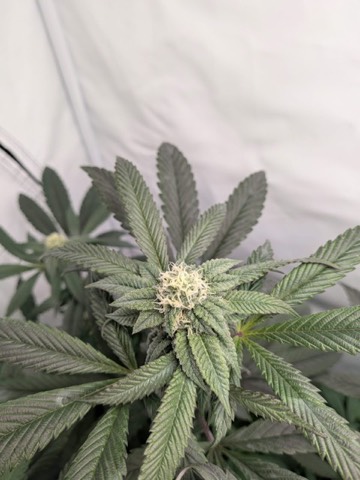
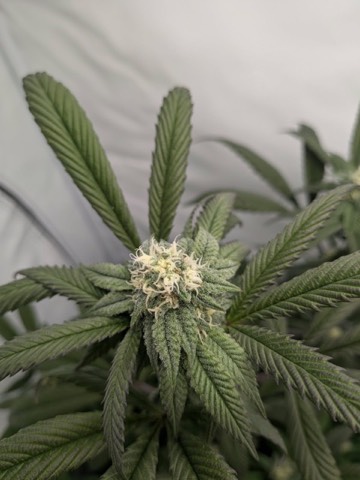
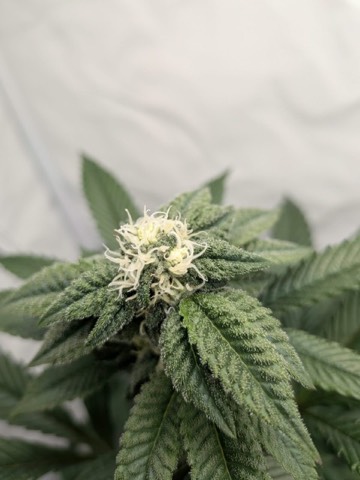
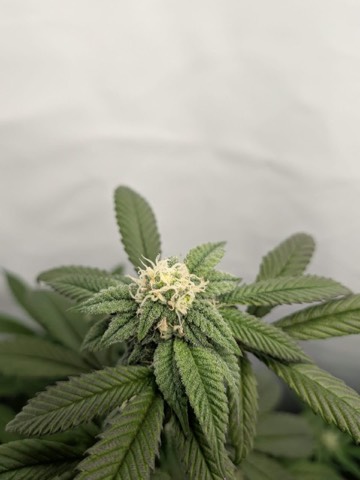
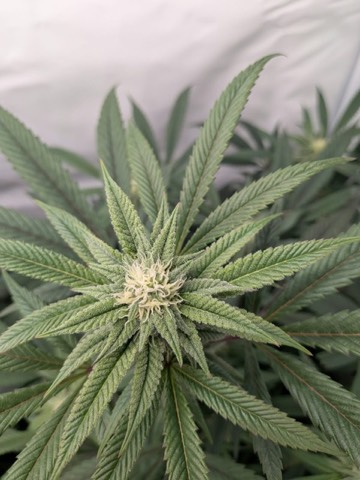
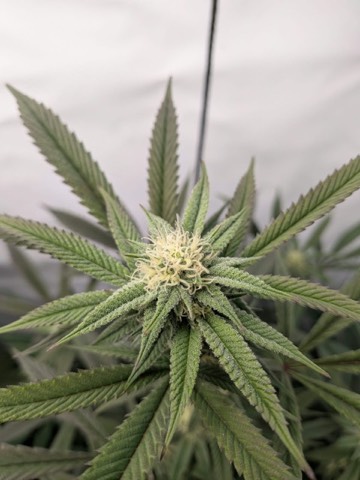
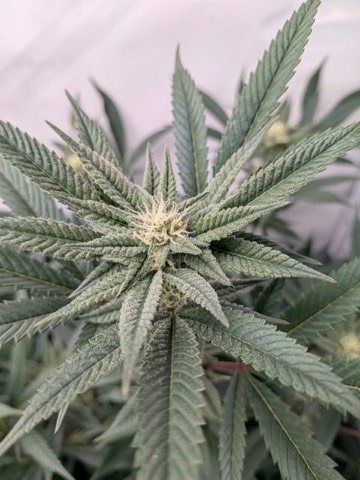
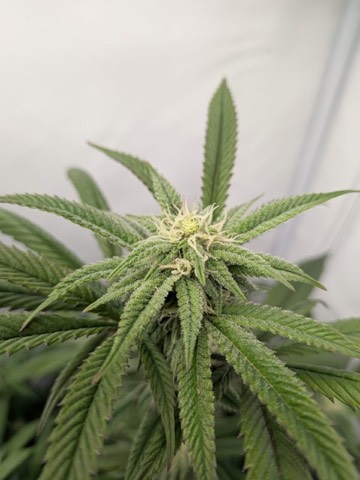
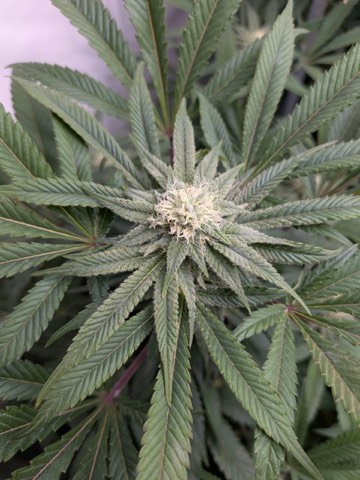
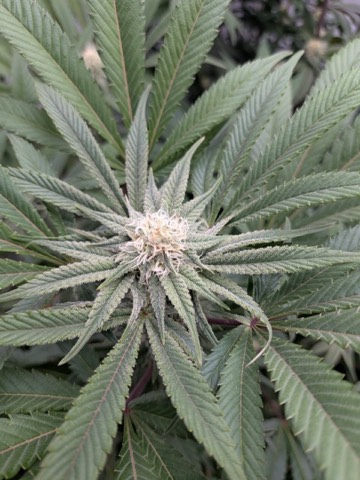
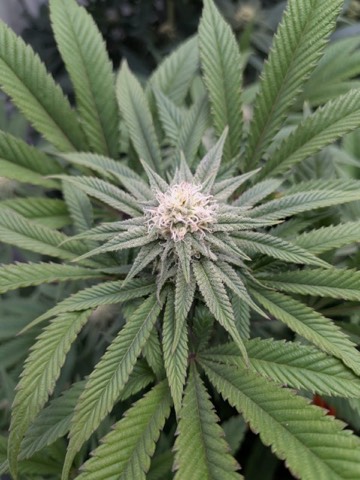
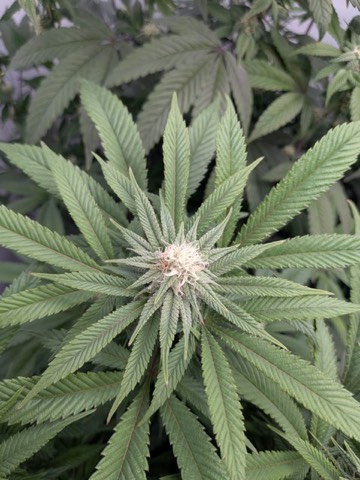
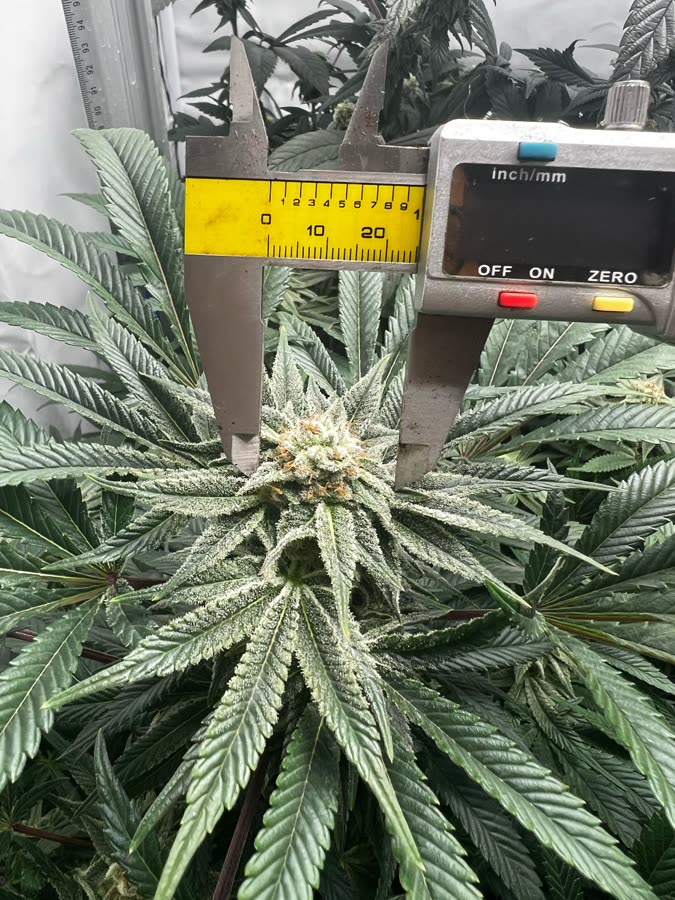
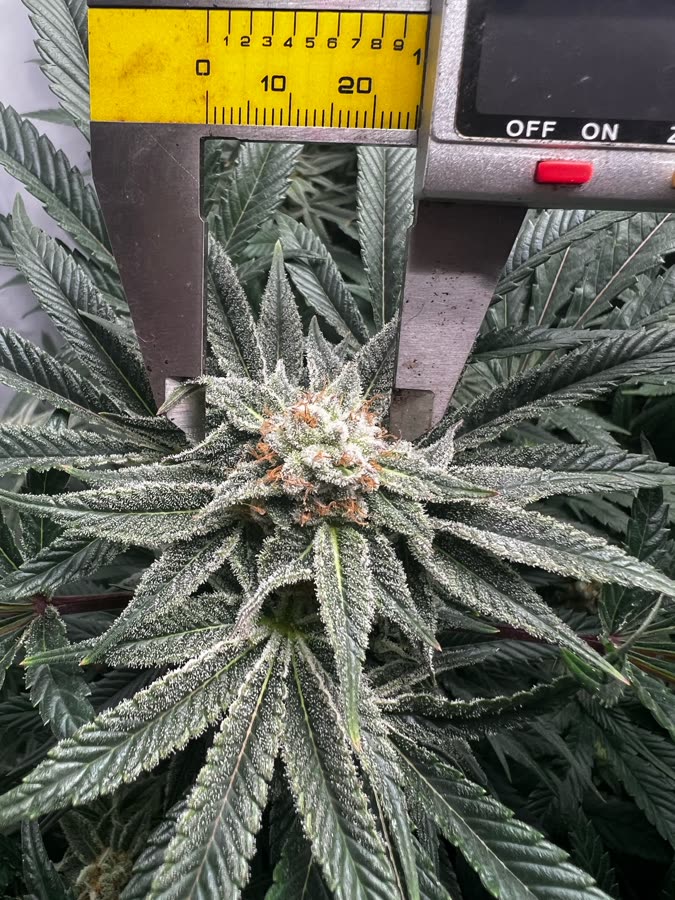
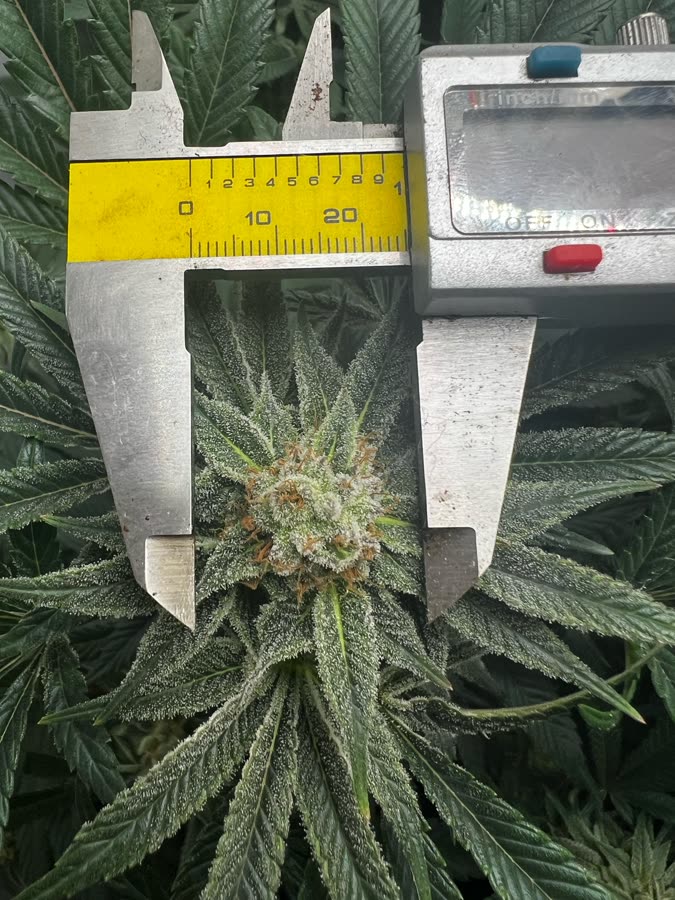
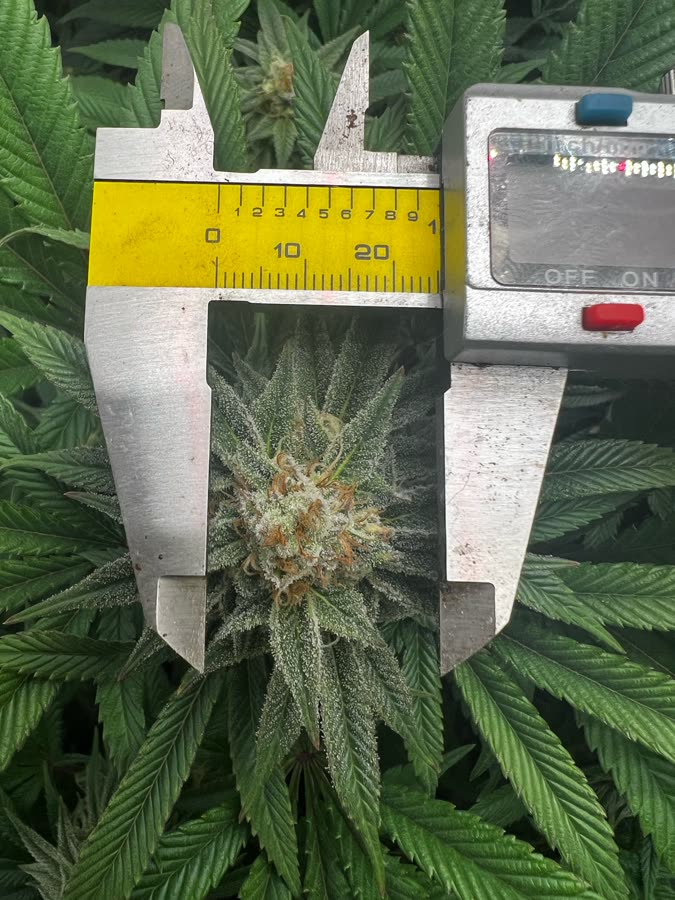
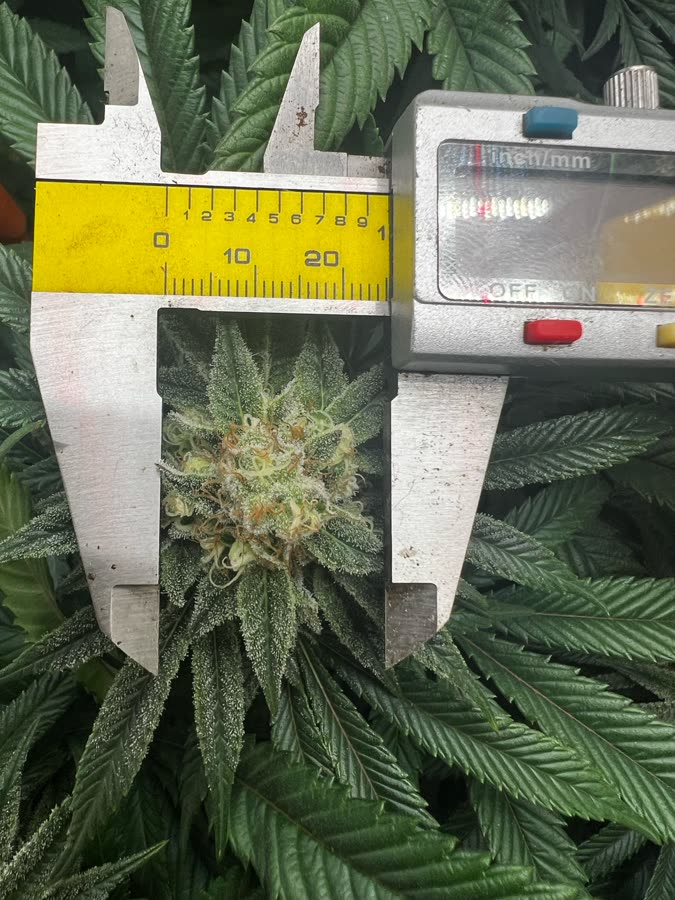
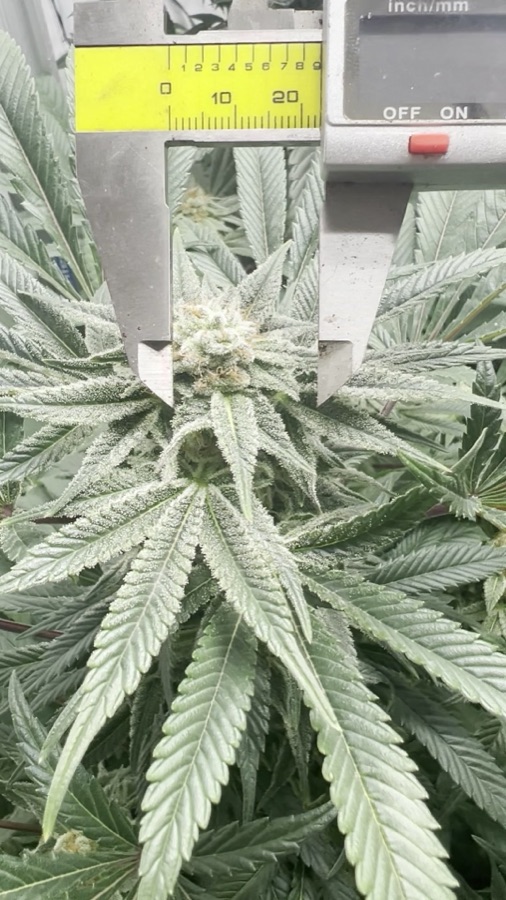
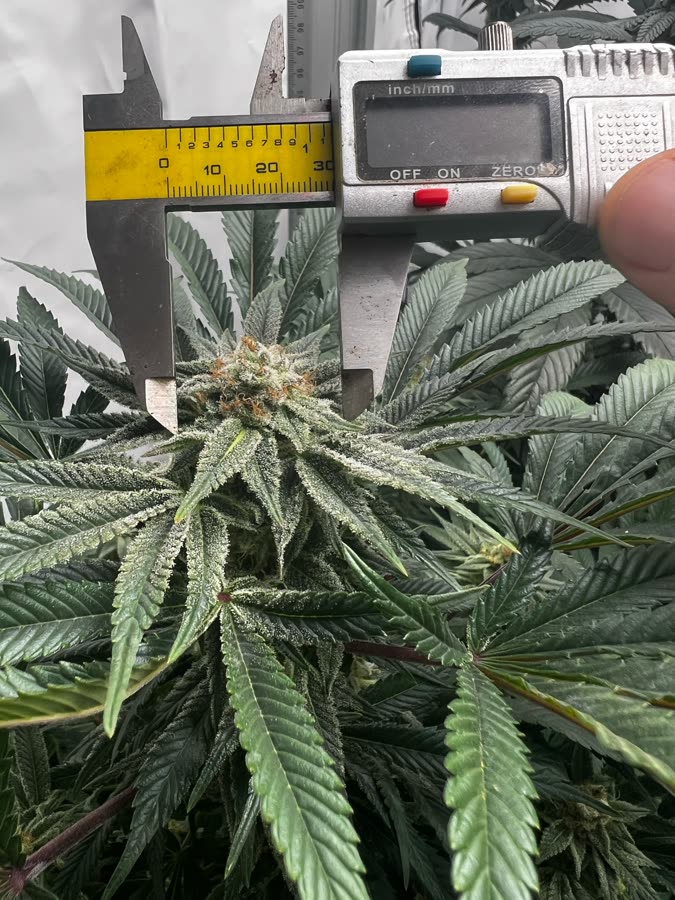
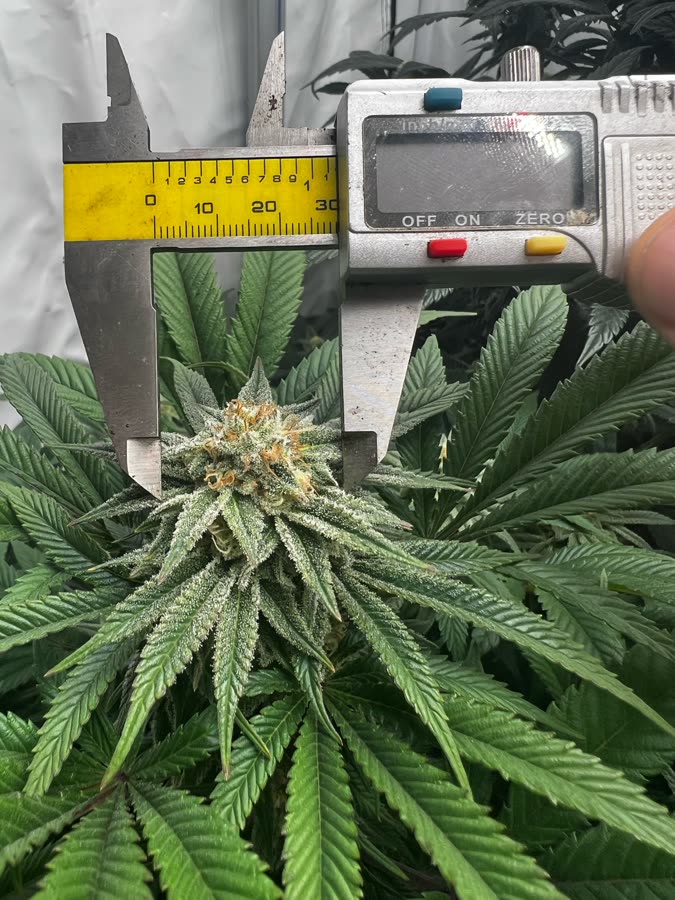
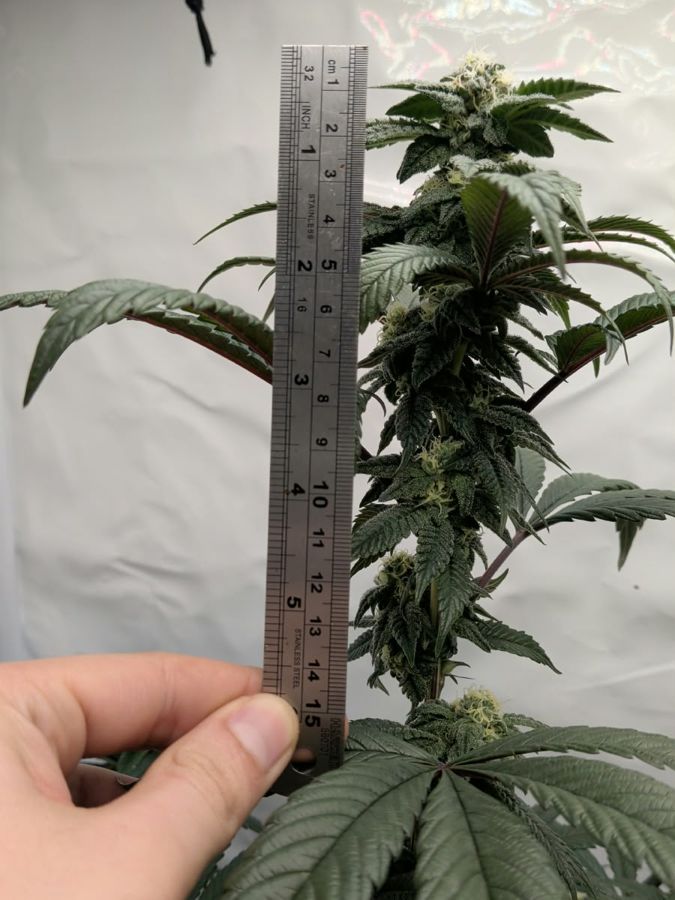
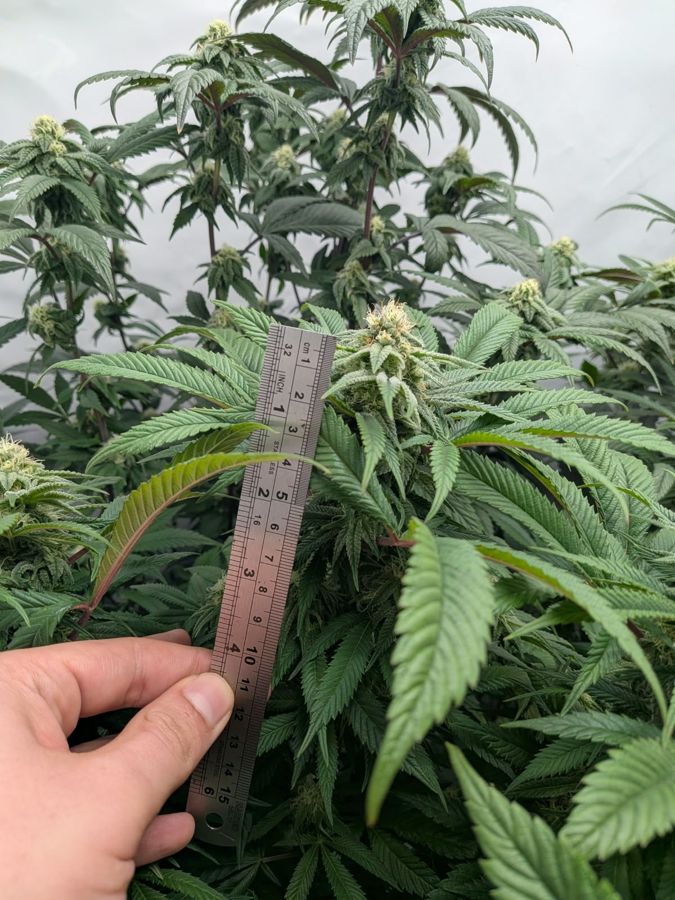
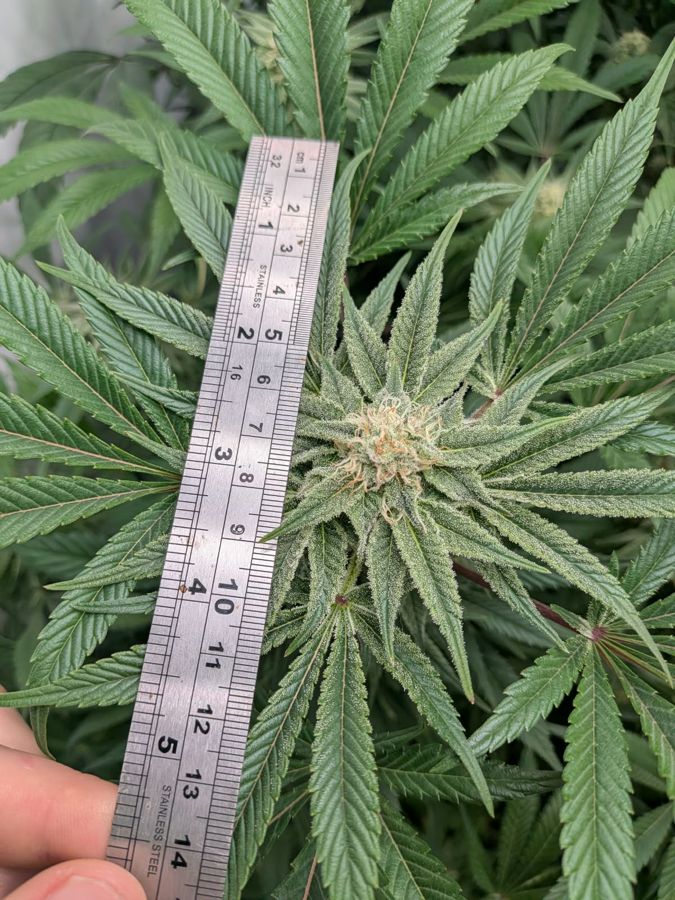
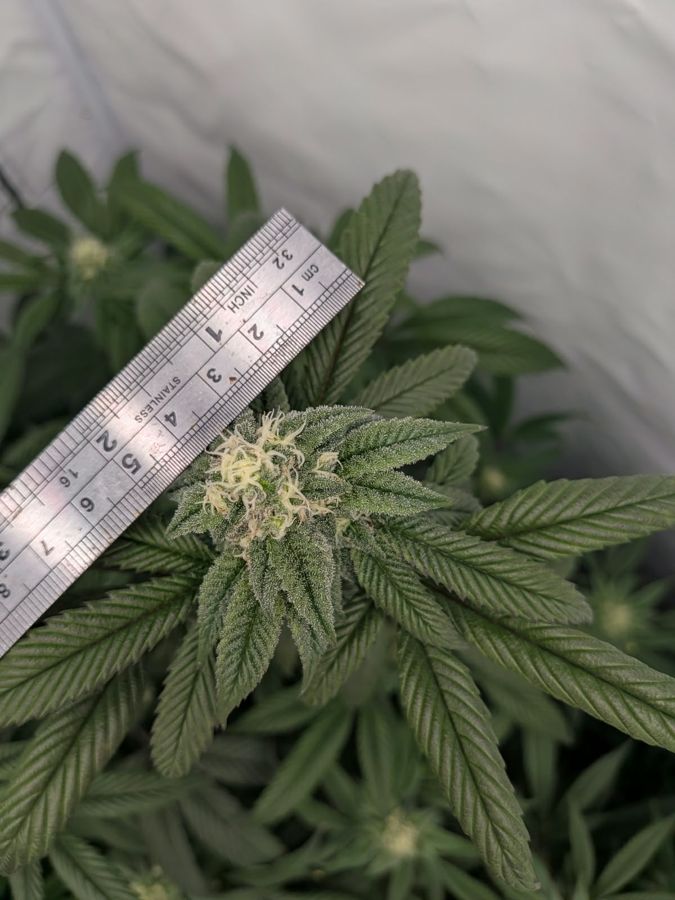
Cientify view

What if the day
lasted 27 hours?

All of light agronomy argues over how much to give the plant. Almost nobody argues over how often, because until recently there was no way to program a day that didn't last 24 hours. That space went unexplored, and inside it there may be a gain that doesn't cost one watt more.

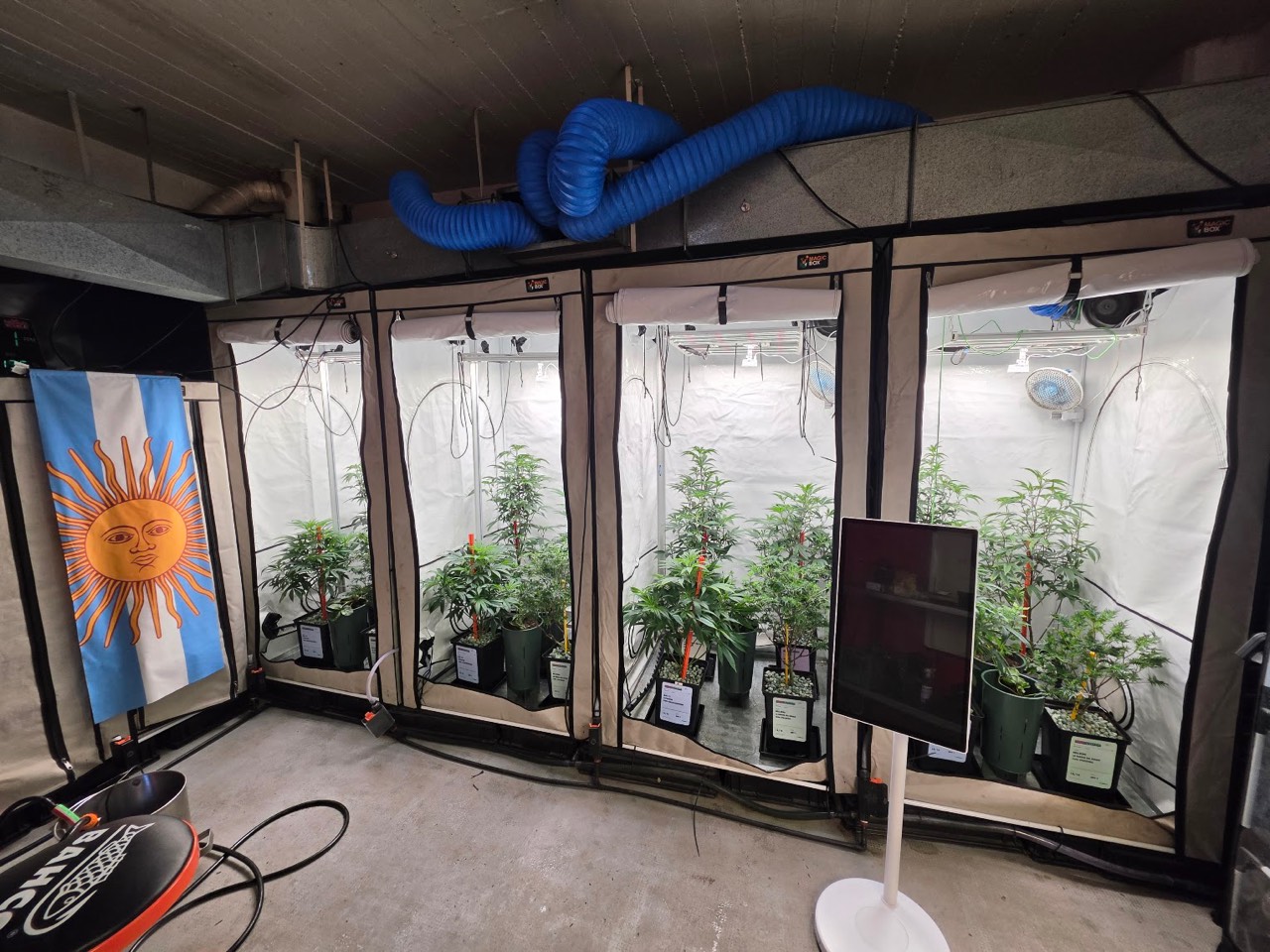
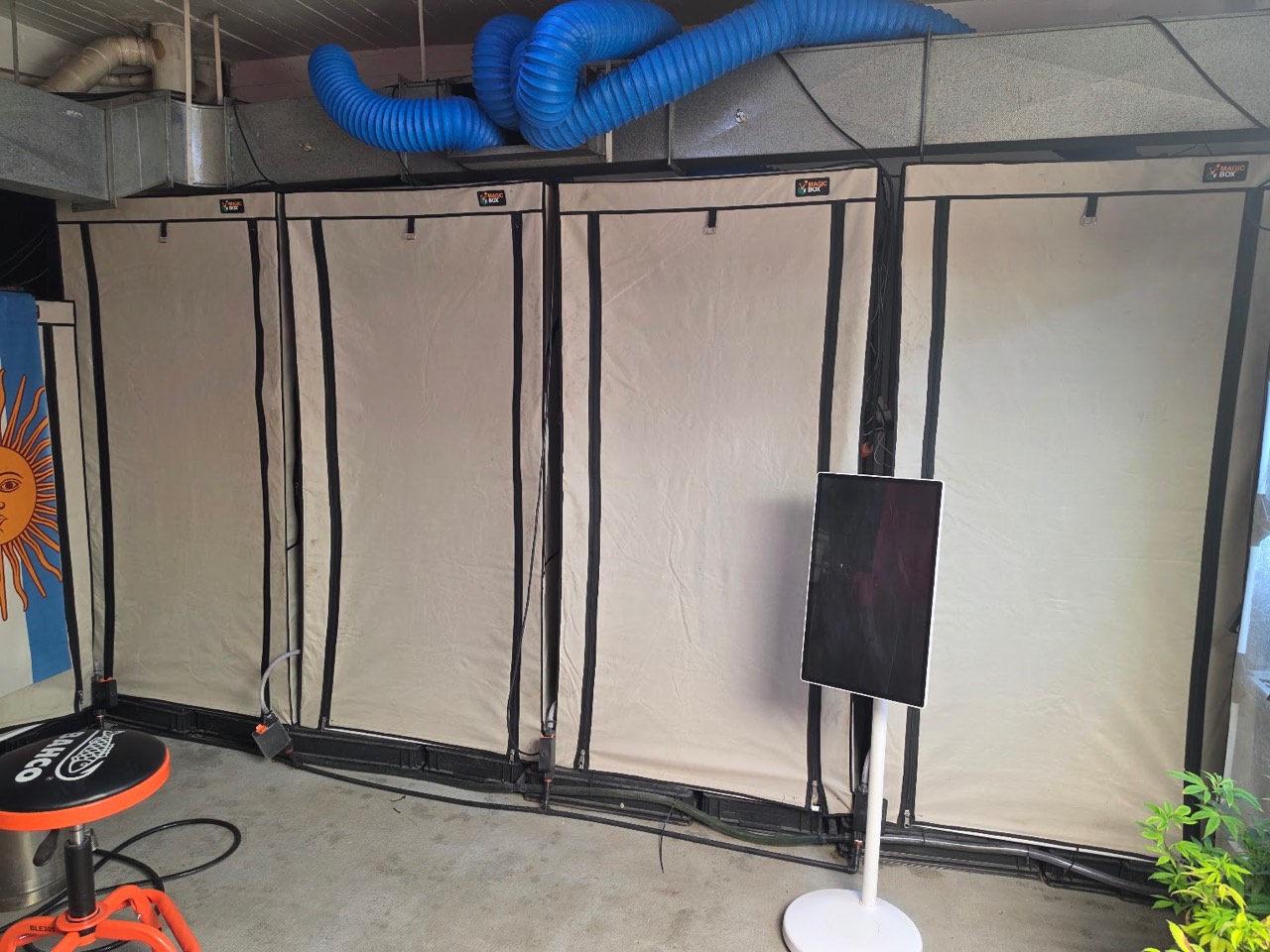
We're running four rooms to find out, with the same clones in all four and the predictions published before the first data point. Further down is the preprint, the paper being written while the trial happens. Part of the method is still open, and that part we want to write with you.

Read the preprint → How to join in

Where this comes from

It started as
a rumor in the rooms.

For more than a year, growers in the network have been running cycles that don't last 24 hours, in rooms that don't know each other, and they come back telling the same story. That proves nothing. It is, exactly, the kind of coincidence that forces you to go and measure it properly.

CyclePeriodWhat gets reported
13/1326 hMore flower and more resin than 12/12, with more calendar days to harvest.
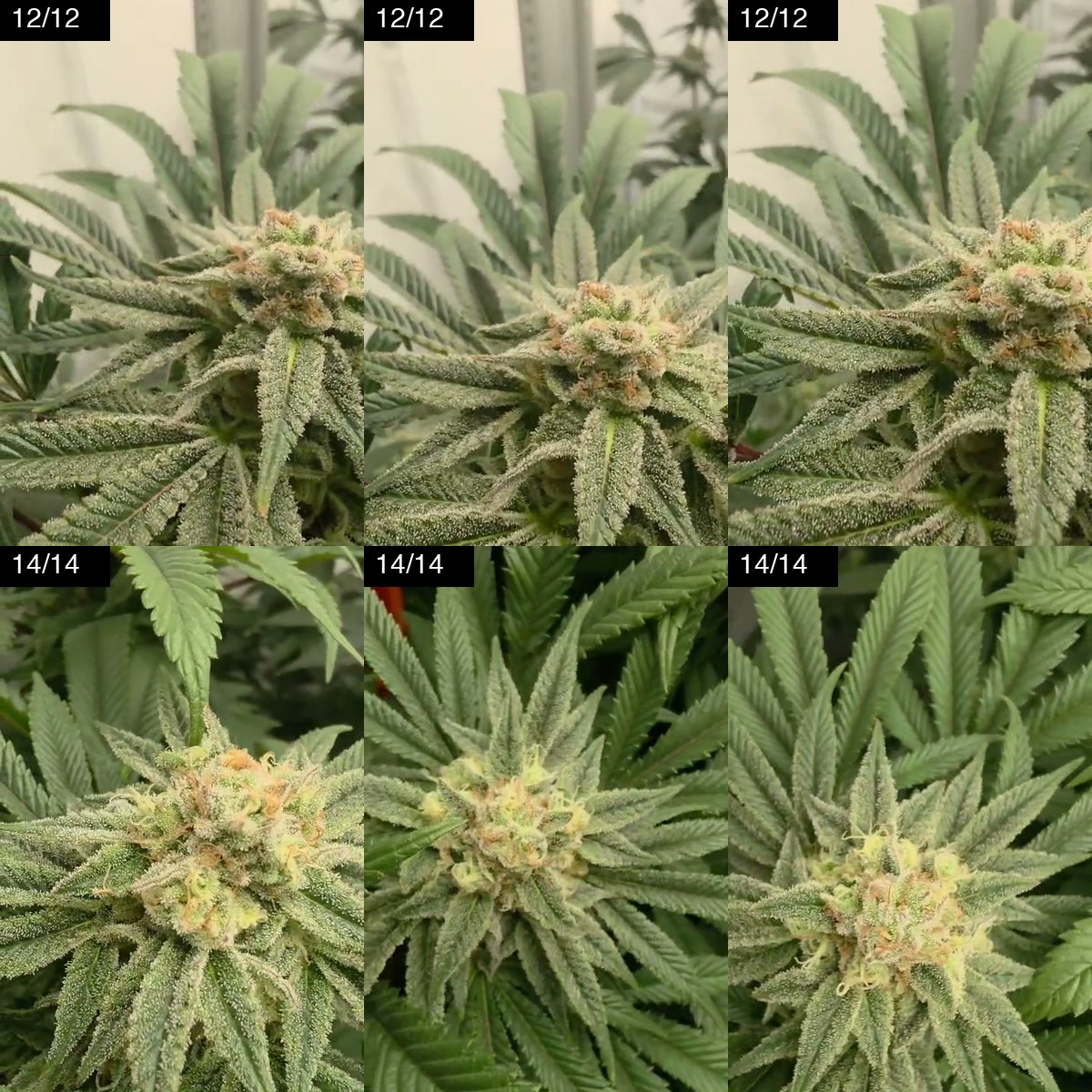
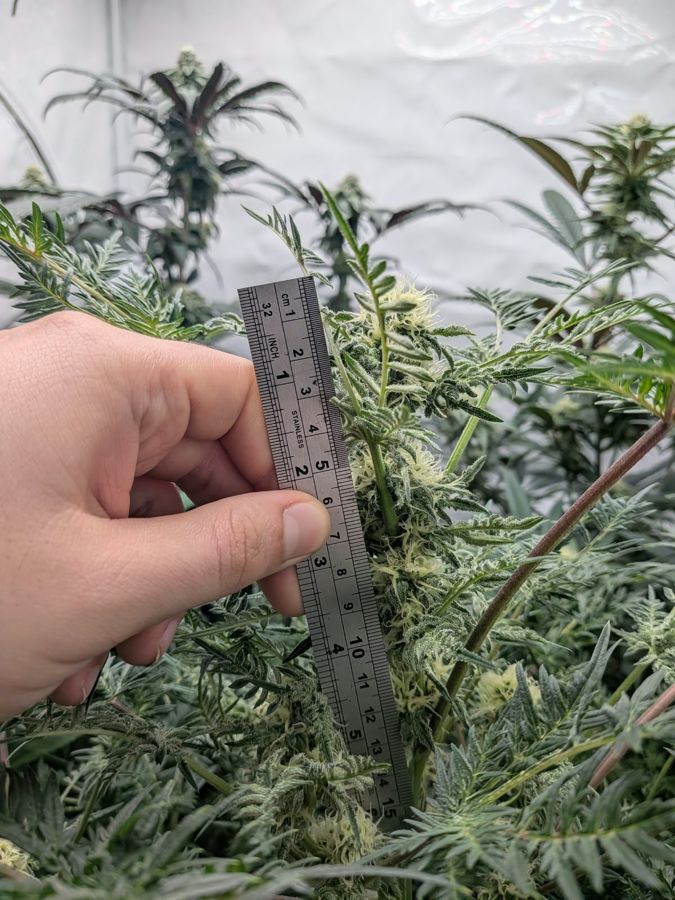
13/1427 hFinishes on the same calendar as 12/12, faster than 13/13, and with more flowering sites. It is the best behaved of the three.
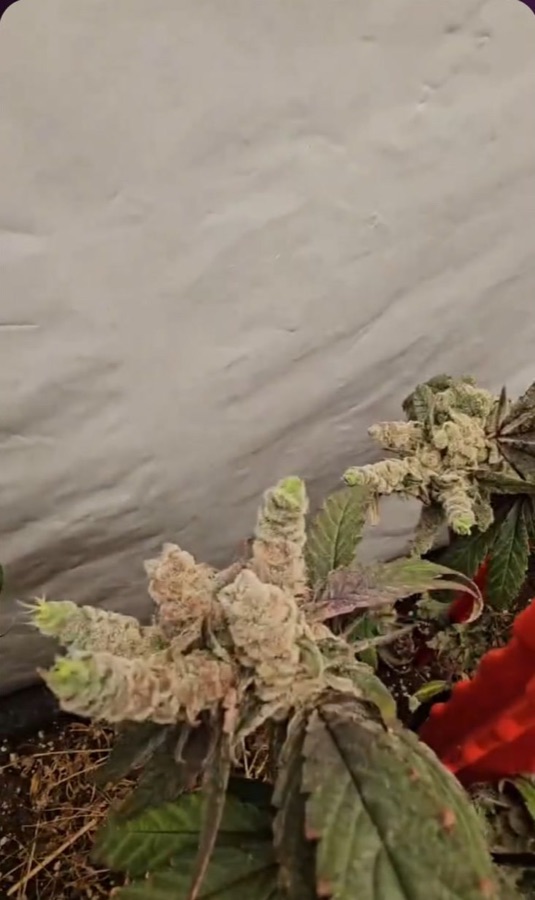
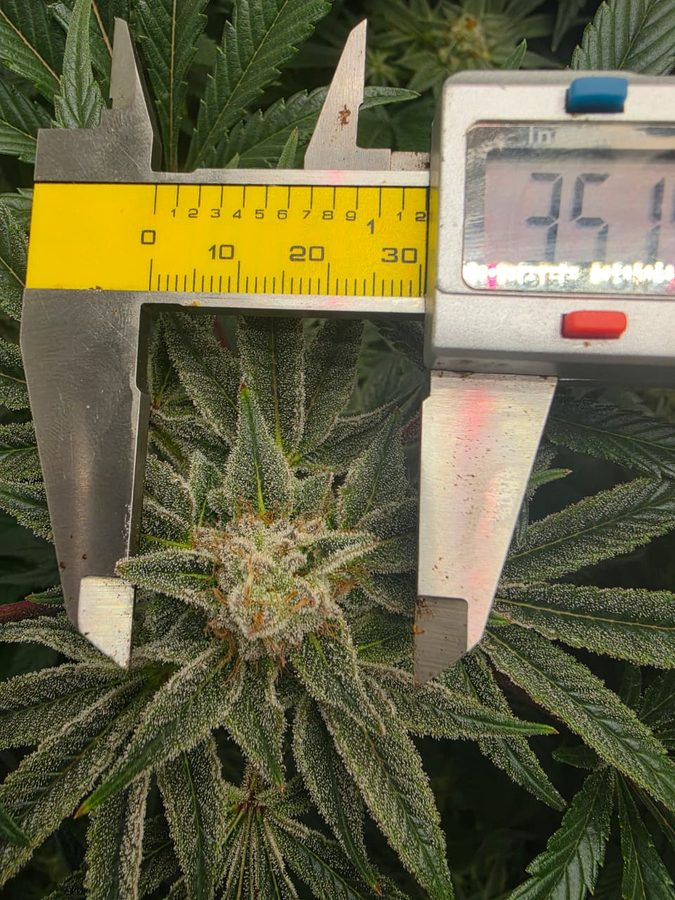
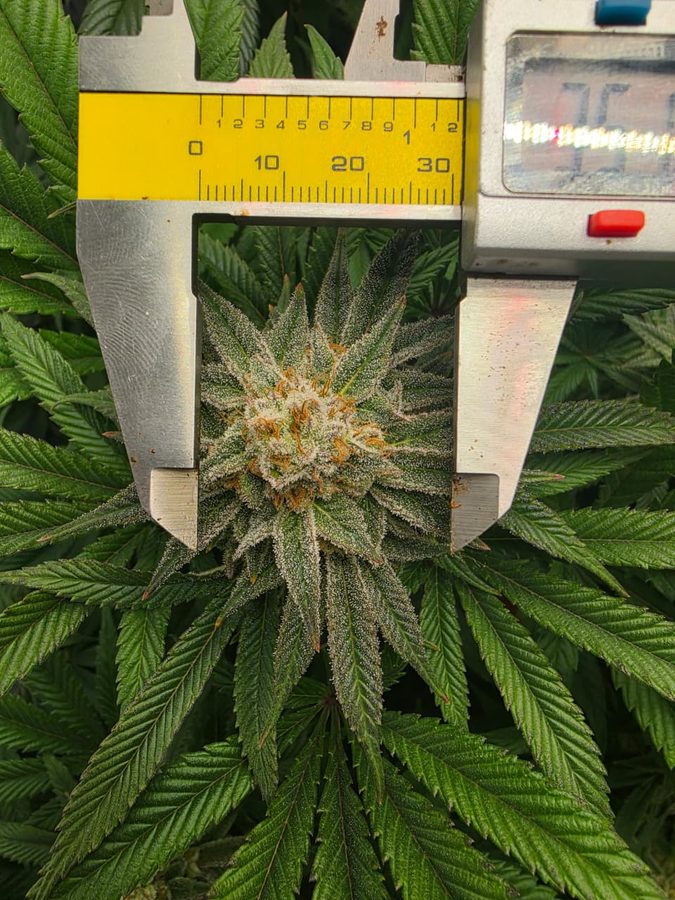
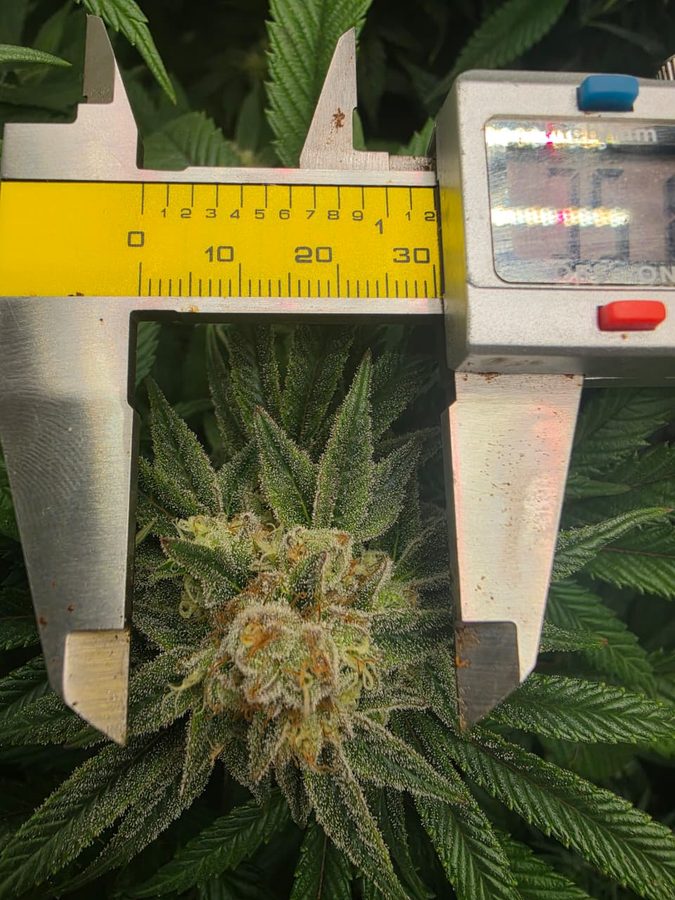
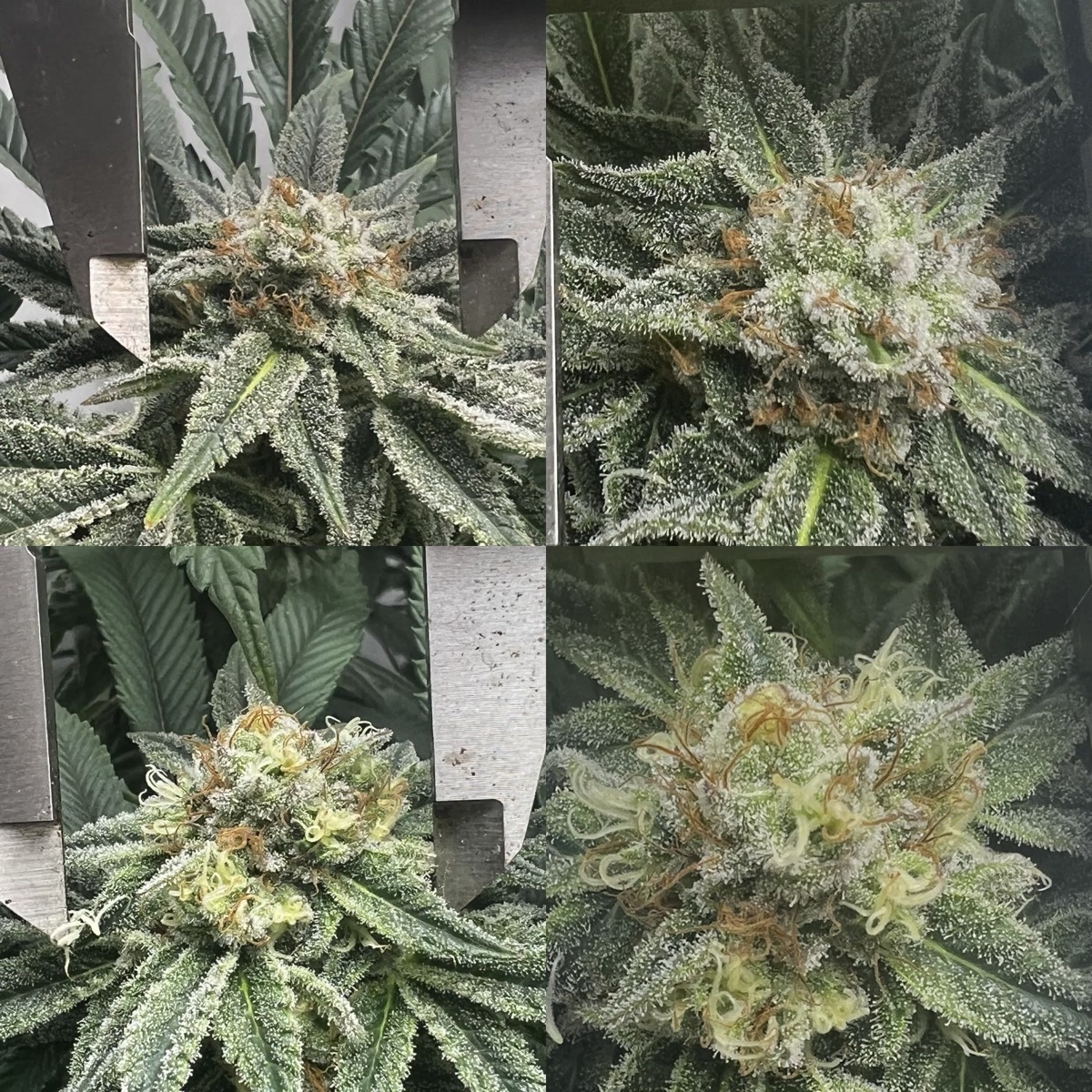
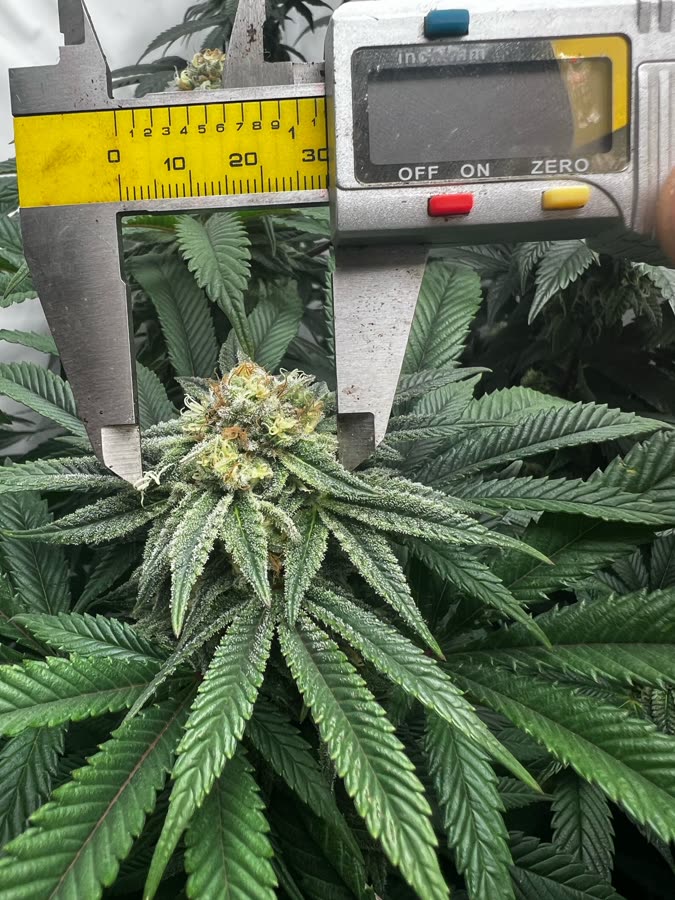
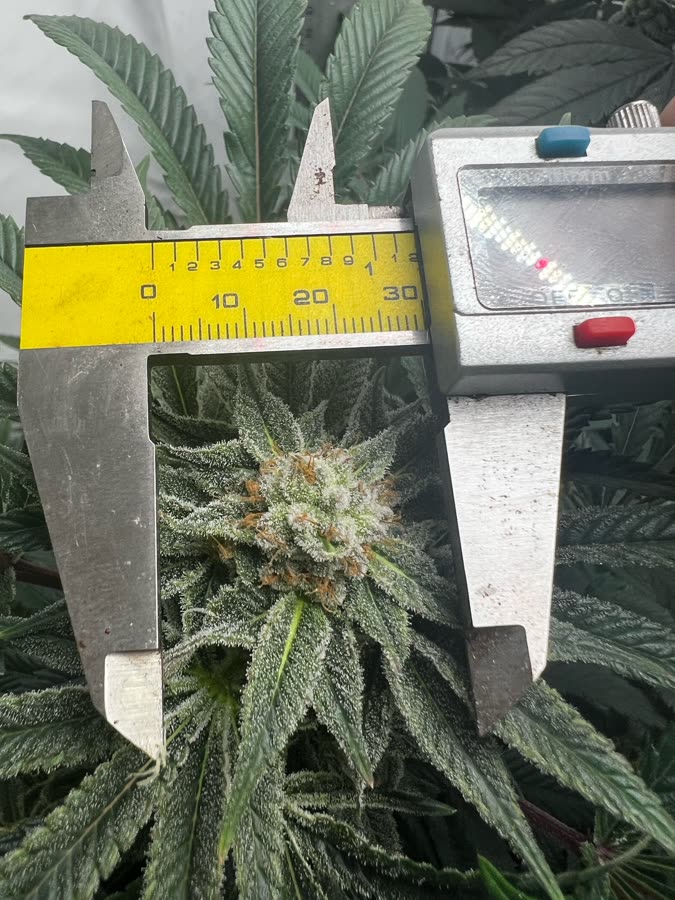
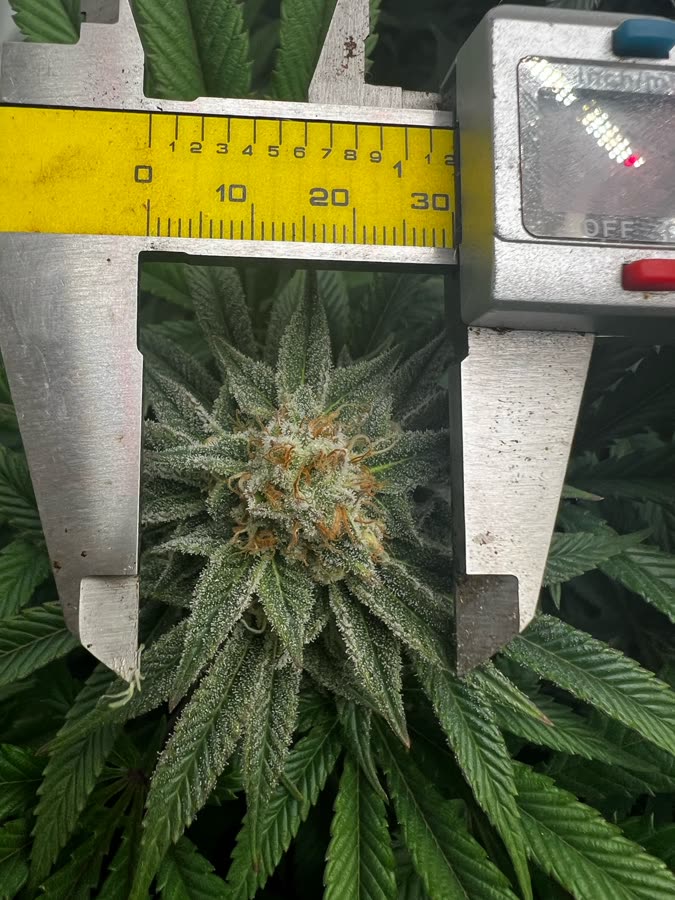
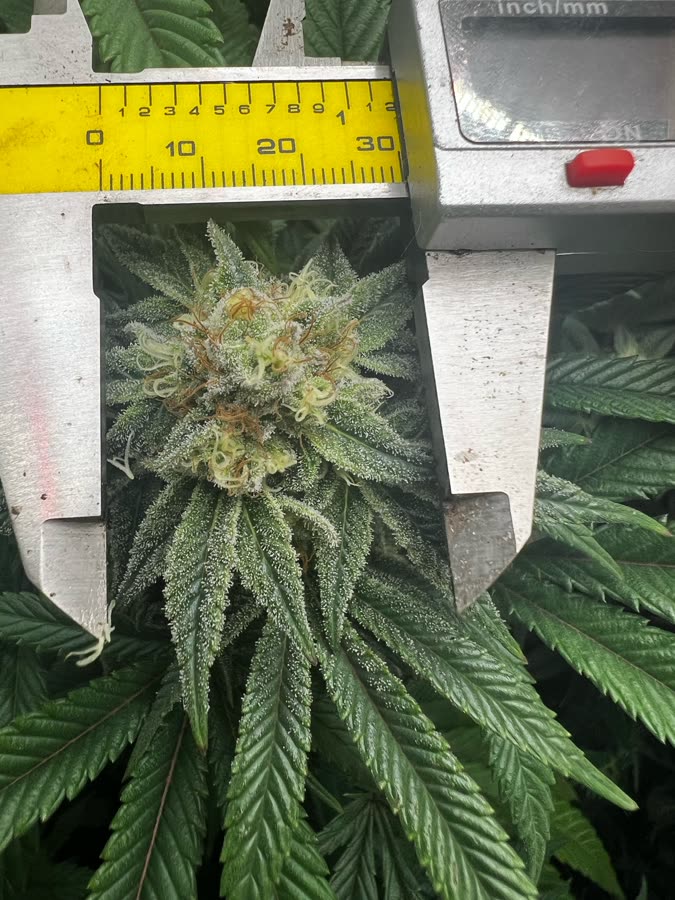
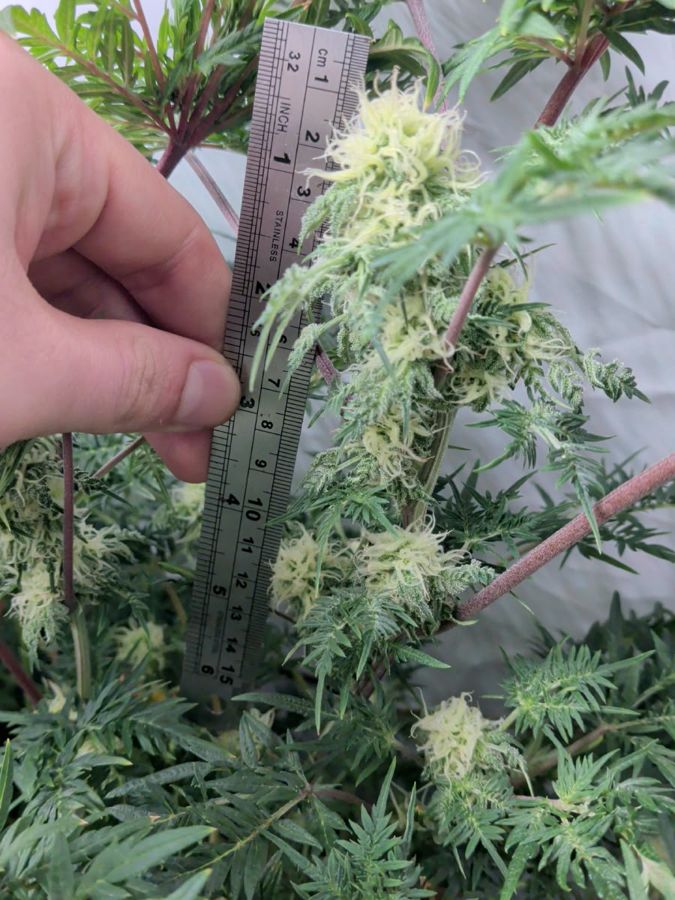
15/1732 hIt depends on the genetic. In most, deformation into thousands of tiny flowers and resin without mass. In some, normal good flowering, unbothered by the regime.
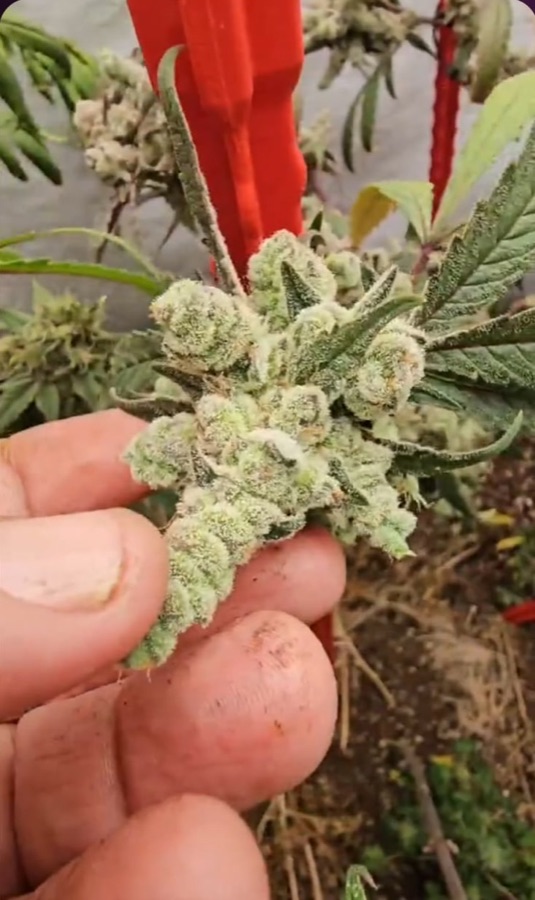
16/1632 hGiant flowers in some genetics. Same period as 15/17 but with more light, and the opposite result.

The detail that made us look twice is that 13/14 uses less light than 12/12. Per calendar day that is 11.56 h against 12, about 3.7% fewer photons, plus 3.7% more hours of dark respiration. If it still yields more, the gain cannot be photosynthesis. It has to be what the plant does with the carbon it already fixed.

The genetics do not respond alike, nor even in the same direction

In the long periods we ran before, what appeared was not a gradient of response but three distinct behaviours.

BehaviourWhat was seen, and in which
Strong respondersMAC2 and one called Peluche made giant flowers under 16/16.
IndifferentA Lit and a Jack Herer flowered normally and well under 15/17, unbothered by the regime. One called P8 did not change shape under 14/14 or 16/16 either, although it did get more resinous.
DisruptedCherry Fire became disordered under 16/16, and under 15/17 most deformed into thousands of tiny flowers and resin without mass.

The P8 case is the most informative of the three groups, because it dissociates the two axes. In that genetic resin responds and morphology does not. That says resin and form are not the same response, and it makes P8 a natural control. None of this is controlled. These are observations from earlier runs with no paired arm, which is why they sit here and not among the results.

This is observational

None of the above is controlled. These are different people, different rooms, different genetics, and no paired comparison arm. It is good enough to decide what to measure, not to claim anything.


The hypothesis

An assumption
nobody validates.

A plant's entire timekeeping system rests on a constant it never checks, because throughout its evolutionary history it held on its own. That constant is day + night = 24 hours.

Under that constraint, a long day and a long night are mutually exclusive. Fix one and the other is determined, so there is a single degree of freedom. A cycle that does not last 24 hours breaks the coupling and gives you two. That is the whole mechanism. You are not adding energy, you are adding a control parameter that does not exist in nature.

And there is a second axis. A plant's circadian clock runs with its own period, τ, which is not exactly 24 h. When the external cycle T drifts away from τ, the clock-dependent subsystems (starch degradation, stomatal opening, the flowering window) stop matching the real environment. When T moves closer to τ, they match better than they would under a 24 h day.

Suppressed senescence

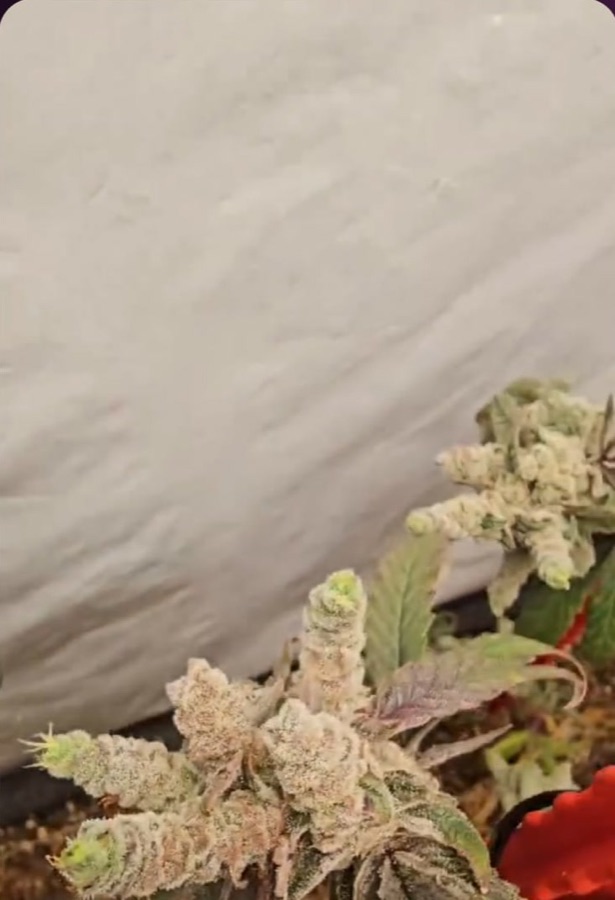
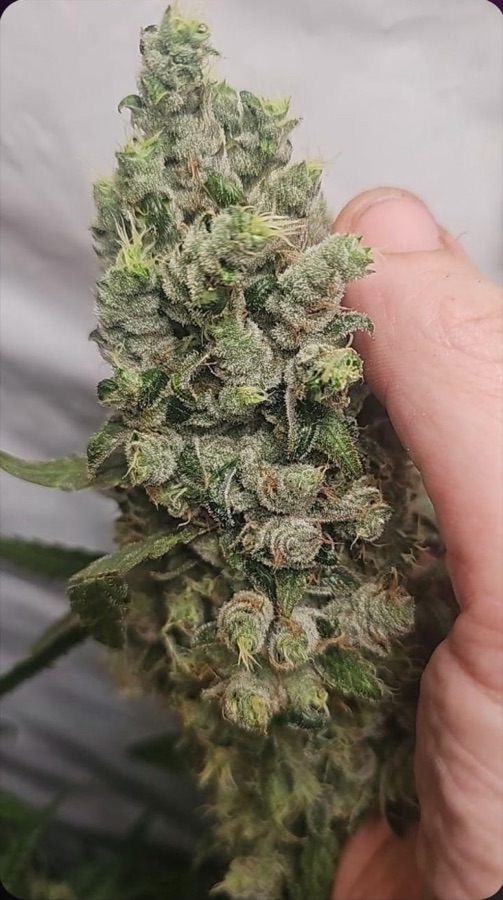
Under these regimes some genetics do not enter senescence. They keep forming new flower, and at the longer periods there are plants that never finish. This is the observation that defined the cut criterion for this trial.

The practical consequence is that the trichome population stays permanently mixed. New flower with clear trichomes sits next to old flower with amber, at the same time, all the time. A maturity threshold of the "70% cloudy" kind does not measure maturity there, it measures the age distribution of the flower.

Under these regimes maturity does not exist as a state, so yield at maturity cannot be measured, only yield at a declared date. And if the long cycle suppresses senescence and the plant does not stop producing, that is a third candidate to explain the yield, distinct from resonance and from carbon starvation.

The two levers

Breaking the 24 h does not give you one knob, it gives you two. Under T=24 day and night are zero-sum and there is a single degree of freedom. Outside 24 h they move independently, and the hypothesis is that each one pushes something different.

Extra light makes mass, which is the direct part. More photons, more carbon fixed, more structure. Extra darkness makes resin, and there the candidate mechanism is Graf & Smith. A night longer than the one the starch program expects leaves the plant without carbon before dawn, and that repeated starvation is a stress signal that pushes secondary metabolites.

The three regimes we have been running fit that. 16/16 adds four hours on each side and gives enormous flowers. 15/17 loads the dark side and gives less leaf, elongated calyxes and resin across the whole structure. 13/14 sits in between and performs on both. If the dance is real, photoperiod stops being an adjustment and becomes a direction. The per-genetic question turns into does this one need more night or more day?

Our hypothesis, in one line

That τ in Cannabis sativa is close to 27 h, and that this is why a 13/14 cycle outyields a 12/12 one on less light.

The endogenous period of cannabis does not appear in the literature we reviewed. If the figure exists, write to us through the form in the footer and the page is corrected with the citation.


What is published

Half of this is
already in the literature.

We are not proposing a new mechanism. Circadian resonance has been studied since the 1970s and there is recent work taking it into commercial growing. What we could not find is anyone running it on a flowering crop, measuring flower and secondary metabolites instead of leaf biomass.

Anton-Sales, C., Benckhuysen, L., Peker, B., Jeuken, M. & Bonnema, G. (2026). Matching circadian rhythms to light–dark cycles increases lettuce yield by 29% in vertical farms without additional energy input. Journal of Experimental Botany.
10.1093/jxb/erag222 ↗

What it gives us. They ran T27 against T24 in lettuce. Most cultivated accessions carry roughly 27 h clocks, and long-clock varieties under the resonant 27 h cycle gained between 11 and 29% biomass, at identical DLI (14.4 mol m⁻² d⁻¹) across all treatments. The mechanism was lengthening the dark period, not adding light.

What it does not give us. Lettuce is a leaf crop. They measured vegetative biomass, with no flower and no secondary metabolites.

Dodd, A. N., Salathia, N., Hall, A., Kévei, E., Tóth, R., Nagy, F., Hibberd, J. M., Millar, A. J. & Webb, A. A. R. (2005). Plant circadian clocks increase photosynthesis, growth, survival, and competitive advantage. Science, 309(5734), 630–633.
10.1126/science.1115581 ↗

What it gives us. This is the foundational result. Using period mutants of Arabidopsis under T20, T24 and T28, they showed that plants whose clock is matched to the external cycle hold more chlorophyll, fix more carbon, grow faster and survive better. The advantage comes from the match, not from the amount of light.

What it does not give us. Arabidopsis in a chamber, focused on the clock rather than on crop yield.

Graf, A., Schlereth, A., Stitt, M. & Smith, A. M. (2010). Circadian control of carbohydrate availability for growth in Arabidopsis plants at night. PNAS, 107(20), 9458–9463.
10.1073/pnas.0914299107 ↗

What it gives us. This is the mechanism behind the second axis. The plant degrades leaf starch at a linear rate calibrated to run out exactly at dawn, and the timer is set by the internal clock, not by the environment. Under abnormal days of 28 h or 17 h, starch ran out roughly 24 h after the last dawn, regardless of the actual dawn. Which means that on a long cycle the plant runs out of carbon before the light returns, every single cycle.

What it does not give us. They did not measure what that repeated starvation does to reproductive allocation. That is where we suspect the resin comes from, with no evidence yet.

Pittendrigh, C. S. & Minis, D. H. (1972). Circadian systems: longevity as a function of circadian resonance in Drosophila melanogaster. PNAS, 69(6), 1537–1539.
10.1073/pnas.69.6.1537 ↗

What it gives us. This is the origin of the resonance idea, that an organism's fitness peaks when the external period matches the endogenous one. It is flies, not plants, but it is the framework everything else comes from.

Vitor, E. I. (2025). The Supercycle Hypothesis — Foundations of Chronobotánica and Temporal Morphogenesis in Plants. Zenodo, versión beta8.
10.5281/zenodo.16763824 ↗

What it gives us. This is the prior work behind the hypothesis. It describes and names the Zombie phenotype a year before this trial, on a specimen that kept producing rudimentary floral tissue 201 days after the start of flowering, without senescing. It also carries the one clean comparison in the document, which is within-plant. Upper branches at 450 PPFD gave necrotic, malformed inflorescences while lower branches at 250 PPFD kept living tissue, under the same photoperiod and the same genetic. It documents anomalies in Fragaria co-cultivated under 15/15, with lobed receptacles, floral remnants fused into the fruit and misplaced achenes. And its introduction announces the 12/12 versus 13/14 clone-matched trial that starts now.

What it does not give us. It has no control. The text itself argues that the phenotypic deviation is large enough that a 12/12 alongside is not needed, and that decision turns everything downstream into description rather than evidence. A 12/12 and 13/13 cohort existed in another chamber and went undocumented. It also speaks of reprogrammed gene expression with no expression data, and of chronomutated morphologies with no genotyping. The Zombie specimen went through chained cycles of 14/14 and then 15/15, so the effect cannot be attributed to either. This trial is the control that work lacked.


What contradicts it

The work that
does not back us.

There is recent work questioning the resonance rationale.

(2025). Non-natural day length does not negatively affect lettuce growth as a result of acclimated carbohydrate rhythms. Scientia Horticulturae.
ScienceDirect · S0304423825003401 ↗

What it says. They grew two lettuce cultivars under periods of 20, 22, 24, 26 and 28 h and found growth and morphology were not affected. Non-structural carbohydrates showed rhythms matching the applied day, which suggests clock acclimation, and therefore that resonance would not be needed.

Why we think it does not apply to our regime. That trial used dark periods of 2, 4 and 6 hours, which is close to continuous light. With nights that short, the starch dynamics Graf & Smith describe never come into play, because there is not enough night in which to run out of carbon. Our regime has nights of 13 to 17 h. We think these are different experiments and not contradictory results, but that is our reading and not something the paper states.

The main objection, stated in full

The orthodox position is that there is no reason in plant physiology for 13/13 to outperform 12/12. Read as a light to dark ratio, it is correct. Both are 50/50, and inside a 24 h day a 13/13 cycle is not even a possible input. It is not the claim of this trial.

What we propose is not that 13 h of light beats 12 h of light. It is that T=27 beats T=24. The variable is not the ratio, it is the period. That question does not belong to photoperiodism but to chronobiology, and there the literature above does have something to say.


Pre-registration · published 16 August 2026

The trial,
declared beforehand.

Setup is Monday 17 August 2026 and the flip to flower day 1 is Thursday the 20th. What follows is published before both dates and with no data taken.

It started, and not on the declared date

The flip to flower day 1 was Tuesday 1 September 2026, twelve days after the Thursday the 20th of August the paragraph above declares. Setup did happen on 17 August; what moved was the flip, because of how long it took to get the four cubicles even. That paragraph stays exactly as published, because it is the prior declaration and editing it is precisely what this page promises not to do.

The cut, which is day 70 from the flip, now falls on Monday 9 November 2026. All four arms are cut that day.

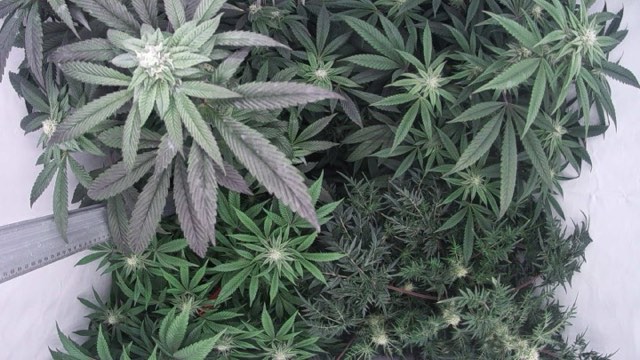
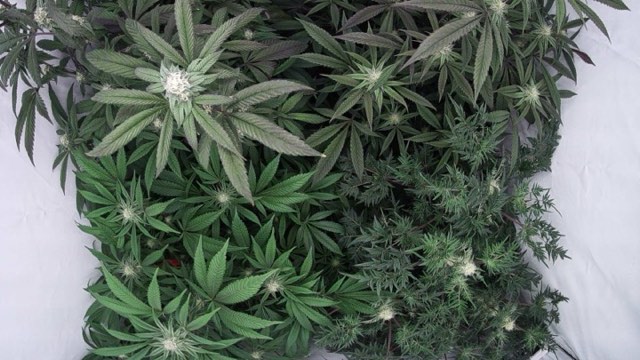
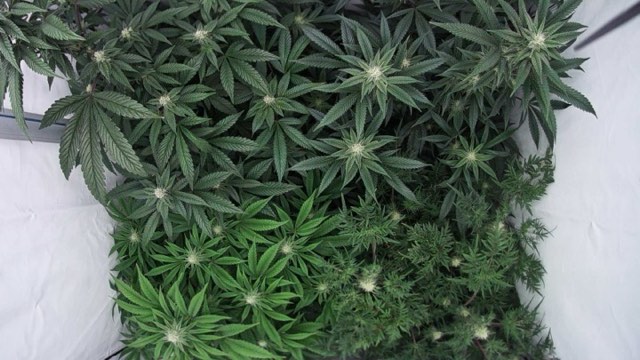
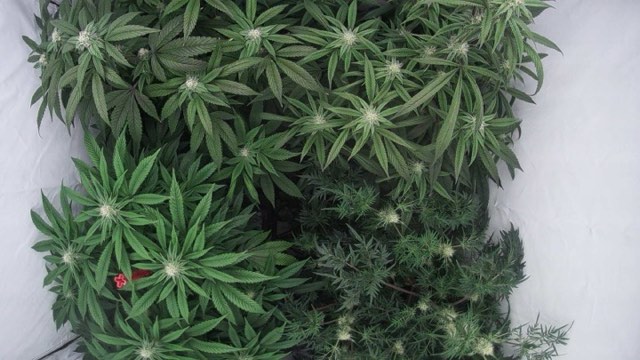
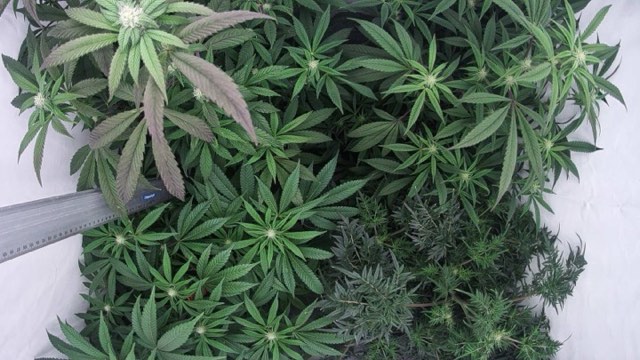
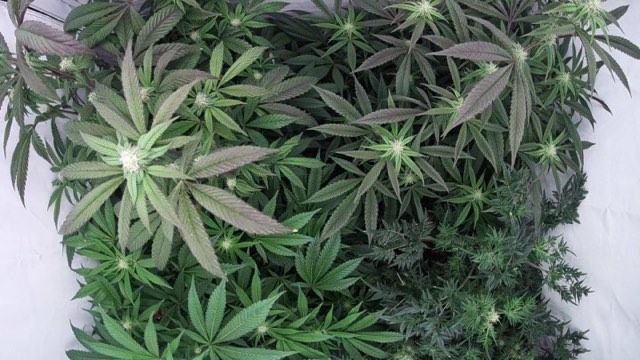
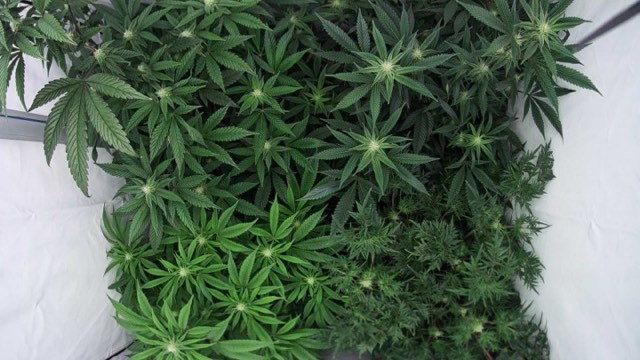
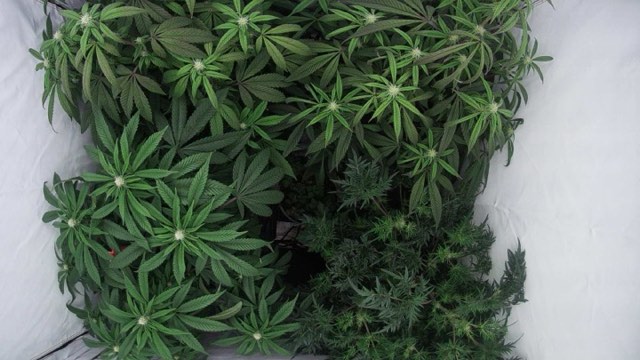
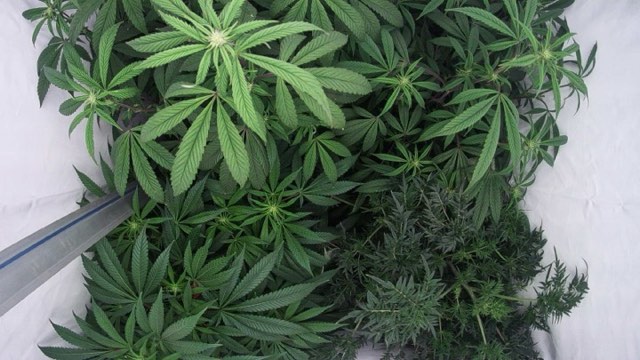
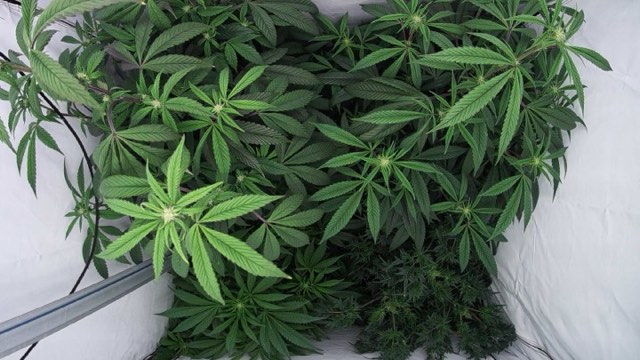
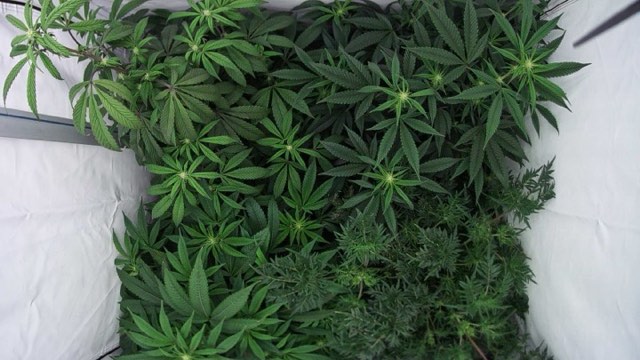
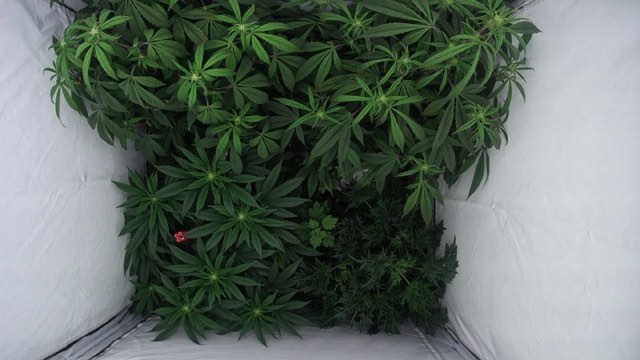
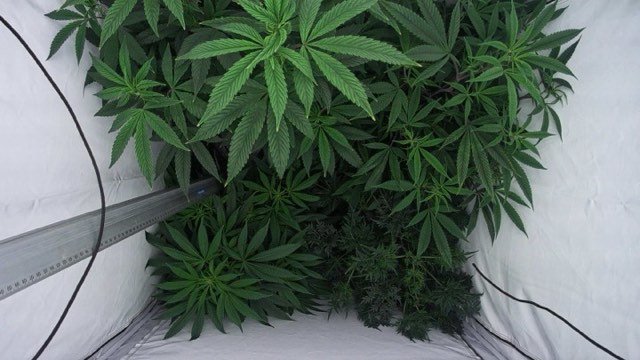
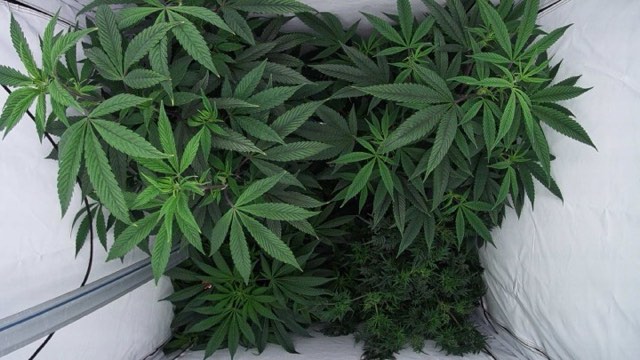
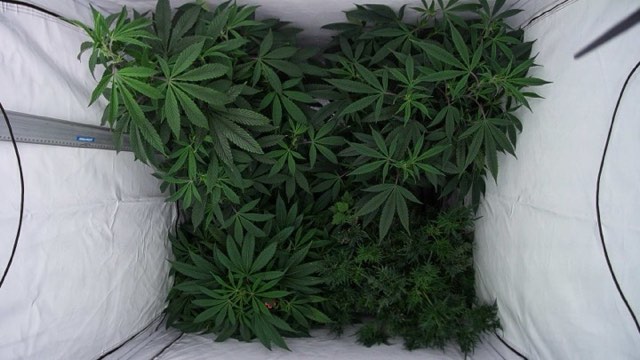
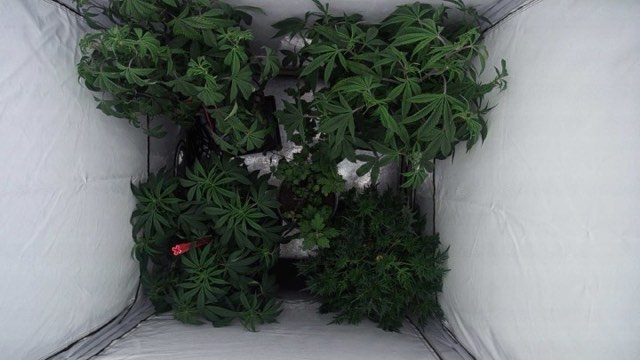
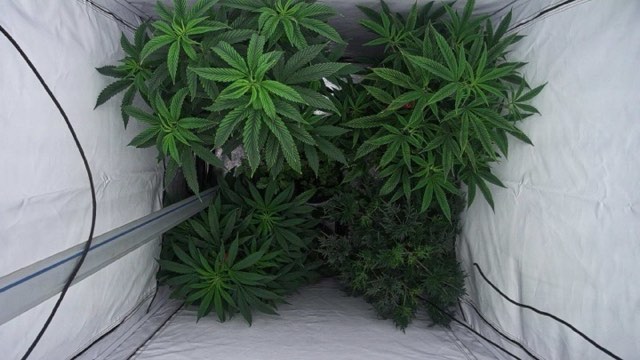
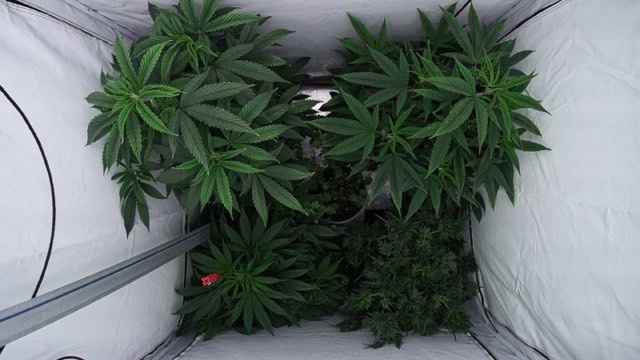
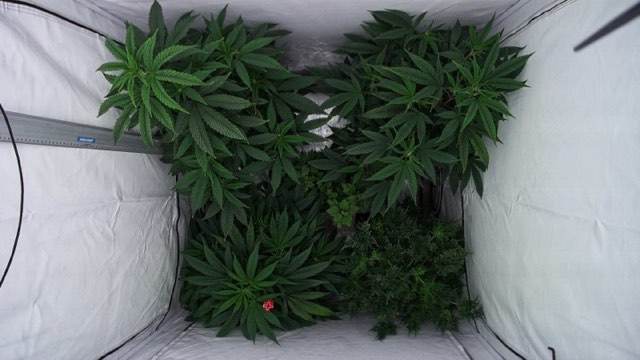
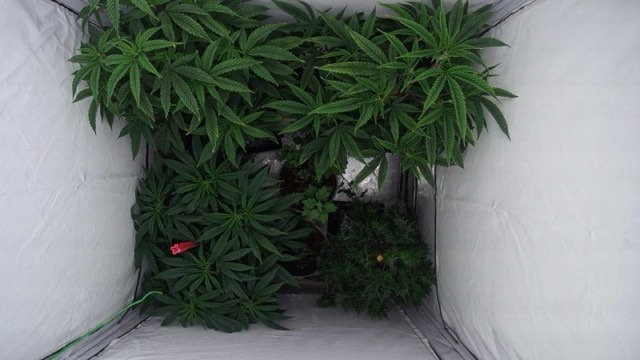
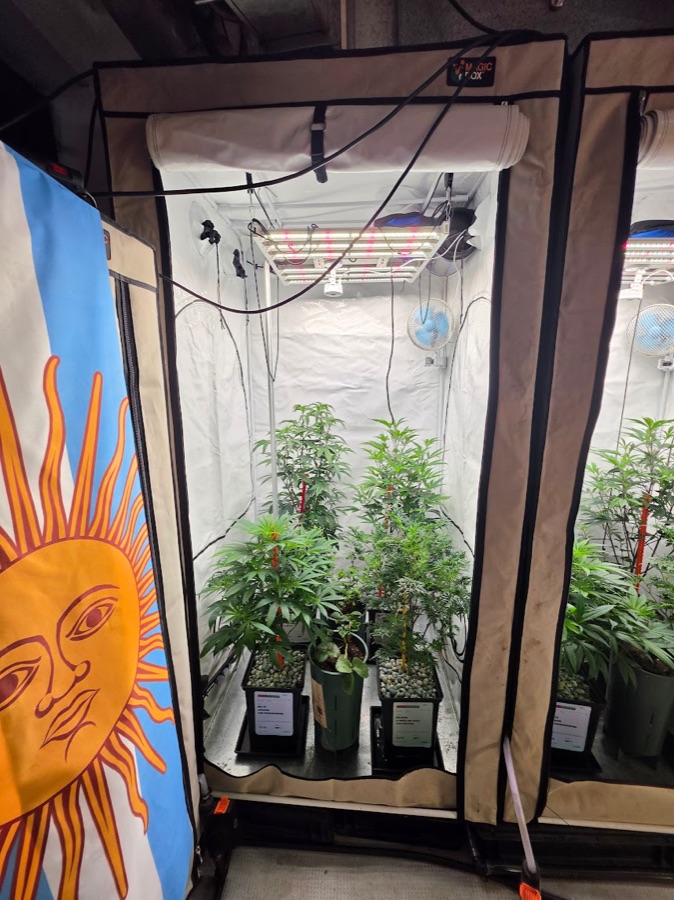
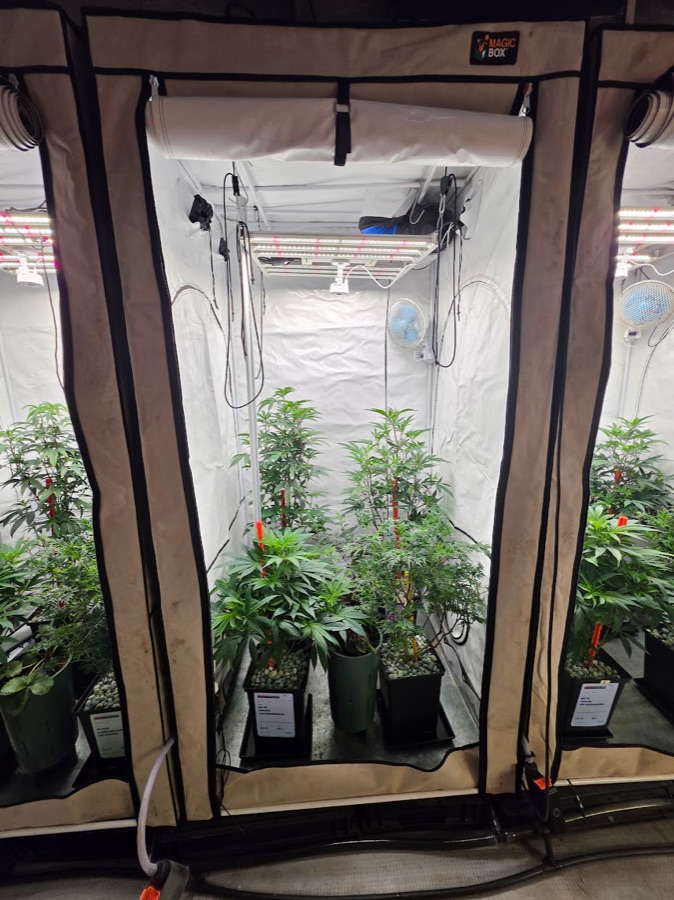
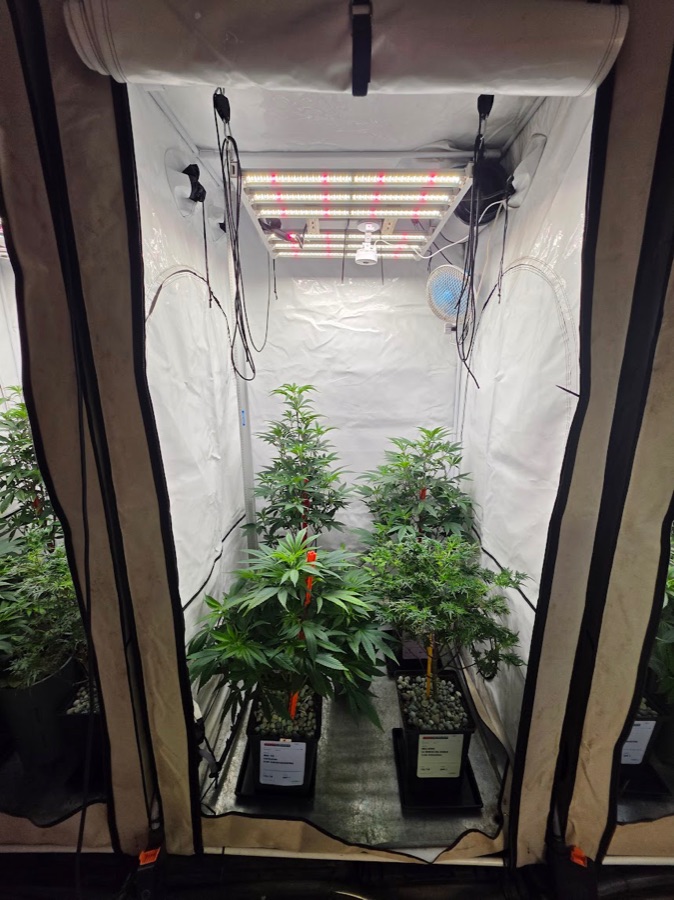
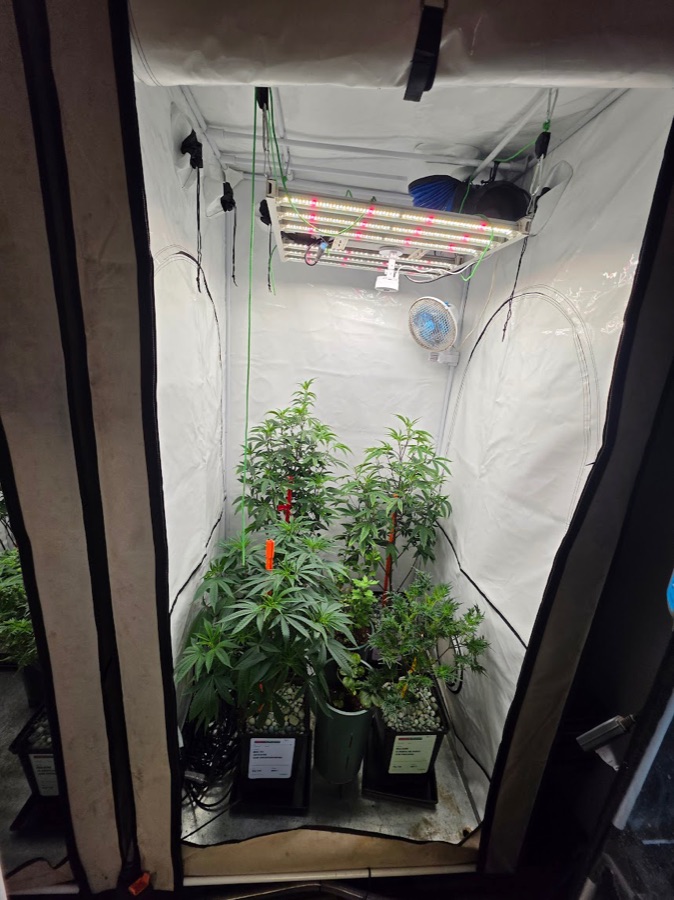
The four arms can be watched. The trial timelapse builds one frame every five minutes with the four screens side by side, from day 1.

ArmPeriod TDistance to τ≈27 hWhat the hypothesis predicts
12/1224 h−3 hThe control. Off resonance.
13/1326 h−1 hClose to the optimum, just below it.
13/1427 h0Predicted optimum. Highest yield per plant.
14/1428 h+1 hThe falsification arm. It has to yield less than 13/14.

The 14/14 arm is what separates the two possible explanations. If yield climbs to 27 h and drops at 28 h, the curve has a peak and that is resonance. If it keeps climbing at 28 h, the explanation is that more darkness yields more and resonance is discarded. Without that arm the two are indistinguishable.

The predictions

Inverted U curve. Yield per plant ranks 13/14 > 13/13 > 14/14 > 12/12, peaking at T=27 h and falling off on both sides.

13/14 wins on less light. It will accumulate 3.7% fewer light hours per calendar day than 12/12 and will still yield more dry weight.

The direction repeats across every genetic. Each genetic is an independent block. If the effect is real, the sign has to be the same in all of them, not an average driven by one.

Comparable calendar. 13/14 finishes on a calendar comparable to 12/12, despite running fewer cycles.

More darkness, more resin. 13/14 will give more resin than 13/13 at comparable mass. Both share the same 13 h of light and differ by one hour of darkness.

On the internal ordering of prediction 1. Both 13/13 and 14/14 are both one hour from τ=27 and both deliver 12 h of light per calendar day, so neither resonance nor the two levers predicts which comes first. What prediction 1 puts to the test is the position of the maximum and the fall on both sides, not that stretch of the ordering.


The limits

What this trial
cannot prove.

Known limitations of the design, and what each one implies for reading the results.

LimitWhat it means
One plant per cellThere is a single plant per genetic per arm. What holds the comparison up is that the clone is the same across all four arms and that genetic works as a block, so the replication unit is the genotype and not the plant. With few genetics the statistical power is low.
Cubicle confounded with armYou cannot run two photoperiods in the same space, so each cubicle is an arm. Any difference between cubicles, be it intensity, temperature or airflow, is indistinguishable from the period effect. We mitigate it by measuring and publishing the environment of each one, and by rotating arms across cubicles in later runs.
No measured τWe do not measure the plants' endogenous period. An optimum landing at 27 h would be indirect evidence that τ≈27 h in cannabis, not a measurement of τ.
We do not say mutationsVery long cycles throw aberrant phenotypes. Without genotyping that is a developmental anomaly, not a mutation.
A single siteOne trial, one room, one operator. Independent replication is not something we can contribute ourselves, by design.
Fertigation covaries with periodIrrigation is attached to the cycle, so over the same calendar the long-period arms get fewer waterings. Over the 70 days of the trial that is 70 waterings for 12/12 and 62 for 13/14, about 11% less water and nutrient. It is deliberate, because the cycle is the treatment and everything is indexed to it, so the only manipulated variable is how long it lasts. But it means a result favouring 13/14 cannot be attributed to photoperiod alone. Absolute totals per arm are reported.
The control may go past peakAt day 70 a ±63 d genetic under 12/12 may be past peak, while in the long-period arms suppressed senescence prevents that. It does not touch dry weight, which plateaus, but it could slightly favour the supercycles on the quality variables.
No light measured in absolute unitsWithout a PAR sensor, the absolute DLI of this trial is unknown. The between-arm comparison rests on the four fixtures being equivalent, and that is checked with lux rather than with a calibrated instrument. If one fixture had far more hours on it than another its output would be lower and that would not be detected precisely. It is the main limitation of the setup.
13/14 moves two variables at onceThe other three arms are symmetric, at 50% light. 13/14 is at 48.1%. So comparing it against 13/13 changes two things together, the period from 26 to 27 h and the light fraction. If 13/14 wins, resonance explains it as getting closer to τ and the two-lever hypothesis explains it as the extra hour of darkness, and this trial does not separate them. We say so now and not once the numbers are in.

What the next run is for

The cut between the two explanations is 13/14 against 14/13. Same 27 h period, inverted light fraction. If only the period matters, both yield the same. If the levers are separate, they differ, and the direction says which one leads.

That comparison is not in this run because there are four cubicles and they are already assigned. It goes in the next one, in about three months, and its design depends on what comes out here. If 12/12 and 13/14 tie, there is nothing to separate and the question changes.

The network is already running this

As of 16 August 2026 there are 113 active zones in the network running 13/13 and 22 running 13/14, against 132 on 12/12. This is not a population that has to be built, it already exists.

The controlled trial and the network complement each other rather than replacing each other. The trial goes after causality in one site, with paired arms on the same clone. The network shows whether the effect survives outside our room. Neither is enough on its own.

The results get published on this same page when the trial closes, whatever they say, with the change log below. In the meantime, the reports section has what the network has already measured.


How to get in

One trial in one room
proves nothing.

What turns this into evidence is that it repeats in rooms we don't control, with genetics we didn't choose and by people who owe us nothing. There are four ways in and none of them asks permission.

Run an arm

The whole protocol is published in the preprint, with the materials, the procedure and the exclusions. Two cubicles and one clone repeated in both are enough. A 27 hour cycle doesn't fit into an ordinary grow timer, and that is probably the reason this territory was never walked.

Break the method

The analysis section is open on purpose and dated. If you see a problem in how we plan to measure this, the moment to say so is now, before there is a single weight on the scale. Afterwards it no longer counts.

Bring your data

If you're already running 13/13 or 13/14, your numbers come in as network observation. They don't replace a controlled trial and they make it far harder to ignore.

Sign the preprint

Anyone who contributes method that makes it into the document, or runs a replication with their own room and their own genetics, is listed as a collaborator when this gets published. The list closes the day the results come out.

You write in through the form at the foot of this page. Tell us what you're going to run, or what's wrong with what we're going to run.


The paper, while it happens

The preprint
gets written here.

A preprint is the paper before review, published so people read it and break it while there's still time to fix it. This one is half written on purpose. What is no longer up for change is marked as closed. Where it says open is where something is still to be decided, and that's where anyone who wants in comes in.

Preprint · under construction

Circadian resonance in Cannabis sativa. Yield, morphology and resin under four periods with paired clones.

E. I. Vitor · Supercannabis Team · Supercycler network · and whoever joins

Version 0.3 of 2 September 2026 · pre-registration published on 16 August 2026 · results expected for November 2026 · free to use for personal and research purposes

Abstract

A light and dark cycle that doesn't add up to 24 hours breaks the coupling between day and night, and leaves two variables where there used to be one. This trial tests whether the endogenous period of Cannabis sativa sits close to 27 hours and whether, because of that, a cycle of 13 hours of light and 14 of dark yields more than one of 12 and 12 while receiving less total light. Four cubicles run periods of 24, 26, 27 and 28 hours in parallel, with four cloned genetics repeated in each one, and one container of chrysanthemums per cubicle as a second species. The primary outcome is dry flower weight per plant on day 70 from the flip, with a simultaneous cut in all four. The predictions were published before the setup and are not edited. The 28 hour arm is there so that we can be wrong in public.

Keywords. Plant chronobiology, circadian resonance, T period, photoperiod, Cannabis sativa, supercycle, pre-registration, open science.

1. Where it comes from closed

Circadian resonance has been described since 1972 in flies and since 2005 in plants, and in 2026 it was taken to production in lettuce with 29% more biomass without adding a single photon. What we could not find published is anyone who has run it on a flowering crop, measuring flower and secondary metabolites instead of leaf.

On the practical side, there are more than a hundred rooms in the network running 26 and 27 hour cycles and reporting the same pattern. None of that is controlled. This trial exists to put a control next to it.

2. Hypothesis and predictions closed

That the clock's own period in Cannabis sativa sits close to 27 hours, and that an external cycle of that length matches the plant's internal machinery better than the 24 hour day we subject it to out of habit.

The five predictions were published dated 16 August 2026, before the setup and with no data taken, and they appear in full further up on this same page. They are never edited, not even to fix a comma. If the data breaks them, they get published broken.

3. Materials closed

Four genetics, one plant of each in every arm, and the same clone across all four. Genetic works as a block, so the replication unit is the genotype.

GeneticDeclared floweringProvenance and notes
Sweet 16
Lit Farms
±63 dProject 4516 × Grandi Candy, mostly indica. Breeder entry on SeedFinder. It is the only one of the three with a published, verified time.
Lemon Cherry Fire F2
Tiki Seeds
unpublished(Lemon Cherry Gelato × Zerbert) F2. The breeder publishes lineage but no flowering time. Lemon Cherry Gelato runs around 56 to 65 days depending on the bank; being an F2 it segregates, so we expect real spread between plants rather than a single number.
SC-G01
n.n.
unknownIndica-looking plant, nomen nescio. Donated clone, received as “Mack #2”, lineage unverified. It is listed by accession code and not by the name it came with, which is not confirmed.
Hell-echo
Berryfreak × Freakshow
unpublishedBerryfreak × Freakshow. The breeder publishes lineage but no flowering time. Freakshow is the one that brings the atypical leaf, so this genetic already has an odd morphology before we touch its photoperiod. Here we look at yield and resin, and leaf shape does not count as an effect of the regime.
A second species, one container per arm

Each of the four cubicles also holds a container of chrysanthemums, one per regime. The chrysanthemum is the other textbook short-day plant, with photoperiodic flowering described decades ago, so it is the cheapest way to ask whether this is about the photoperiod or about the species we have been looking at.

It does not enter the primary endpoint or any prediction. It is a declared observation, with no replication inside each arm. We log flower-bud date, opening date and appearance, with a photo. If the ordering across arms resembles the one above it is a lead for the next trial; if it does not, it refutes nothing that is predicted here.

4. Procedure closed

The cut criterion, drying, and exclusions

All four arms are cut on the same calendar day, day 70 from the flip. There is no per-plant maturity criterion, because under these regimes maturity does not exist as a state. Day 70 comes from the flowering time of the slowest known genetic (Sweet 16, ±63 d) plus margin for an F2 that segregates and for a genetic of unknown timing. Dry weight plateaus rather than falling, so that margin does not affect the primary endpoint.

With a single date for all four, the long-period arms get no extra days and the curve in prediction 1 stays comparable. With a different cut rule per arm it would stop being so.

Drying. Wine fridge at 14 °C and 65% relative humidity, all plants in the same space. Each one is weighed when the flower moisture meter reads 12%, with the same meter and the same scale, at 0.1 g resolution. Every reading is logged. A moisture point rather than fixed days, because it removes how much water each plant was carrying from the equation.

Exclusions. A plant that hermaphrodites or dies is excluded from the primary endpoint and reported with its arm, its genetic and the day. It is not replaced. If the events concentrate in one arm, that is a result for that arm.

What we measure
WhatHow
Primary endpointDry flower weight per plant. Chosen in advance. Wet weight is not used to conclude anything.
LightAbsolute DLI is not measured and is not claimed. We have no PAR sensor. What is determined is the light ratio between arms, because the four fixtures are the same model, at the same power, at the same height and over the same area, and with matched fixtures, the DLI ratio is the hours ratio. The hours actually executed are verified against the light action log, which records the expected and the confirmed time of every transition, so they are the hours that happened and not the hours on the schedule. Parity between cubicles is checked with a lux reading at a fixed point in each, at setup and at cut. With identical spectra, the lux ratio is the PPFD ratio.
EnvironmentTemperature, humidity and VPD logged continuously by Supercycler with Tuya sensors, per cubicle, for the whole trial.
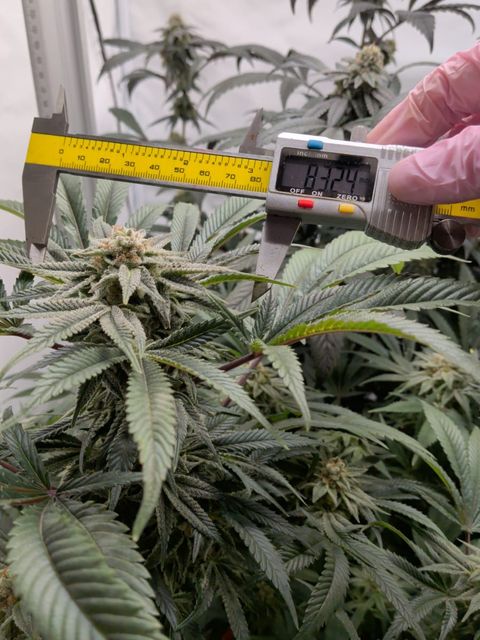
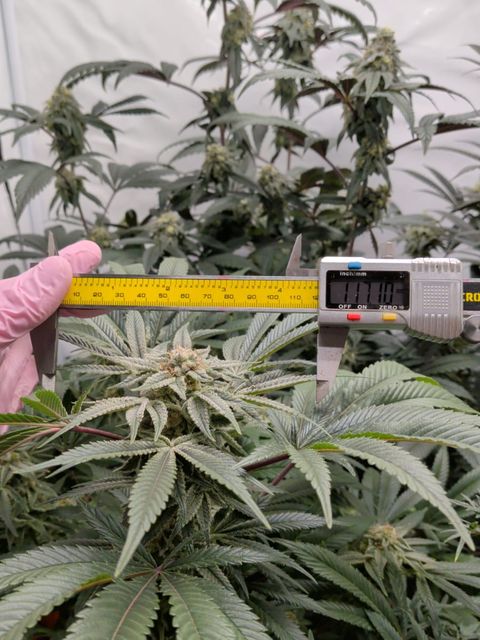
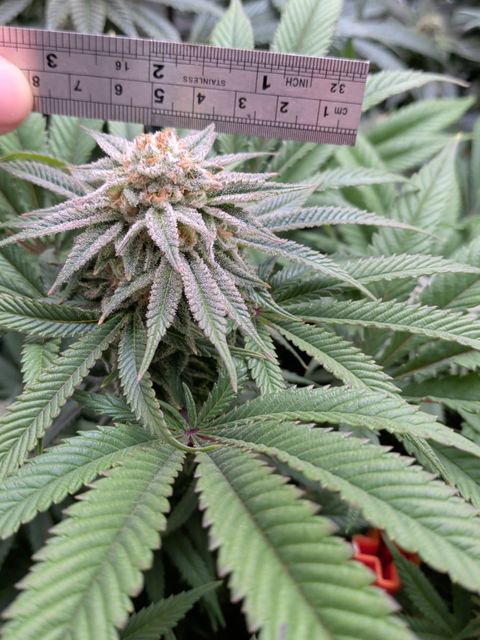
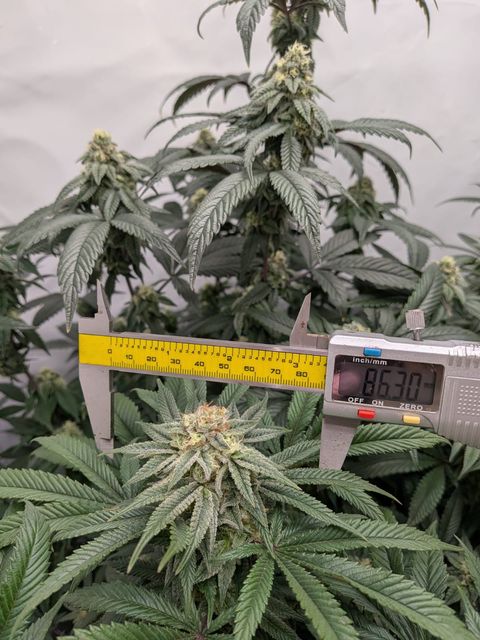
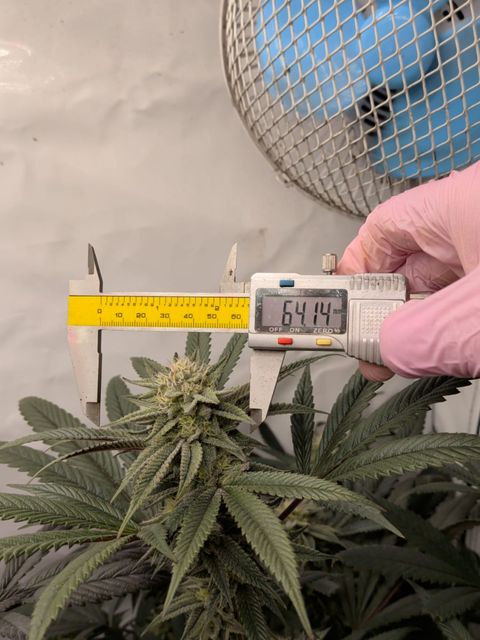
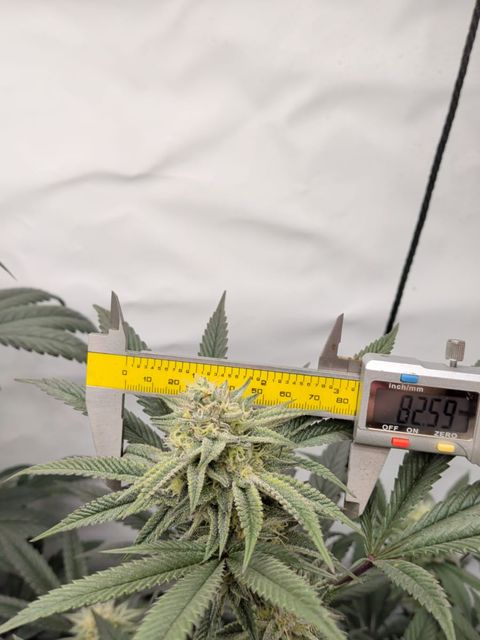
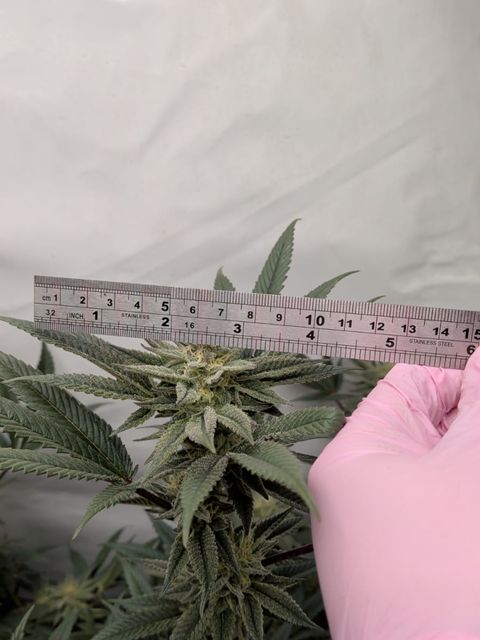
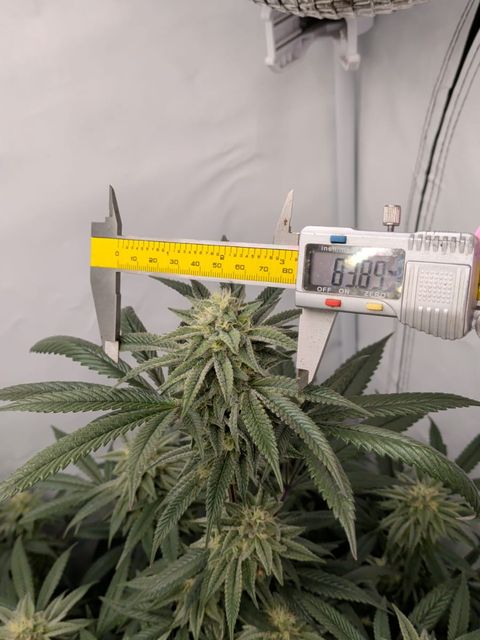
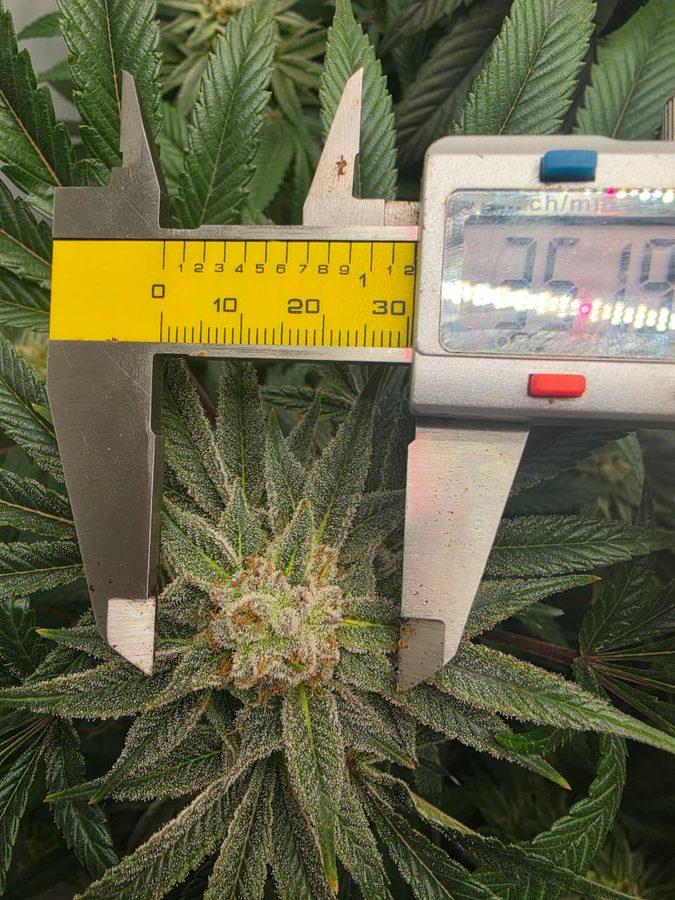
MorphologyPhotos with a scale in frame and growth mapping with the Eyes cameras. Flowering sites, calyx length and stigmas per flower.
CalendarDays from flip to cut, fixed in advance at 70 for all four arms.
DesignBlocked by genetic. The same clone goes into all four arms. One cubicle per arm, four plants per cubicle, one of each genetic, plus one container of chrysanthemums per arm which sits outside the primary endpoint.
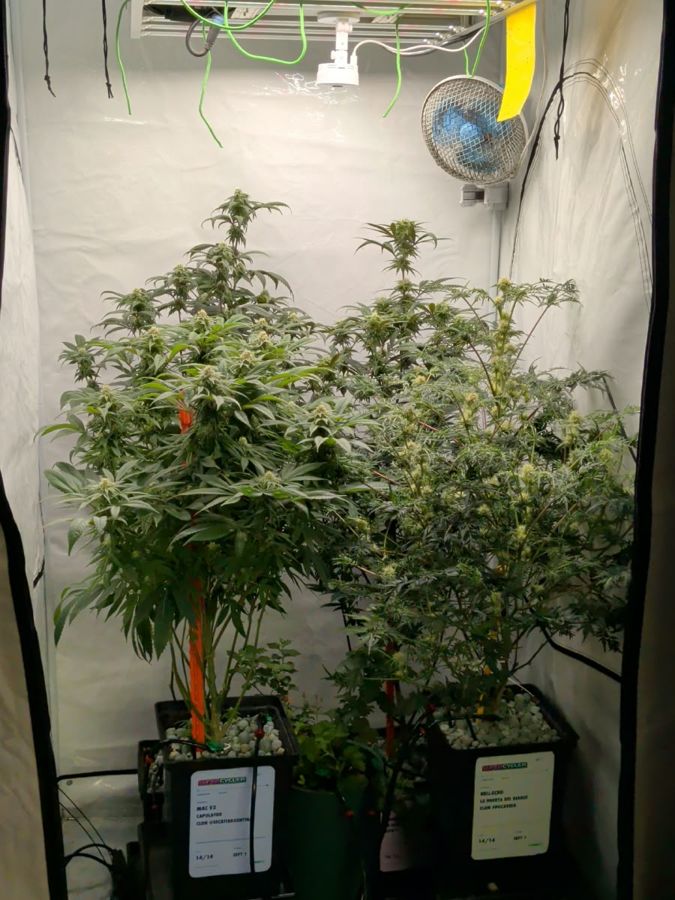
Room and lightFour 1×1 m indoor tents, 300 W Sylvania each, switched by Shelly from Supercycler. Real schedule adherence is verified against the light action log, which records the expected and the confirmed time of every transition.
Irrigation and substrateHunter drip, two 2 L/h emitters per pot, 10 L pots with Growers Supersoil. Irrigation is attached to the cycle, same amount and same relative hour. Actual counts and volumes per arm are reported, measured rather than estimated.
FeedingShort flowering schedule, with the stage indexed to the cycle and not to the calendar, like everything else.
ChemistryTHC and CBD series with a Purpl Pro from the declared week, taken as a relative trend and not as absolute potency, because the method is NIR and it is validated on dried, ground sample. The number we publish comes from the CONICET laboratory. Samples are pre-declared now, upper third of the apical cola, same mass, one plant per genetic per arm, taken at cut.

5. Planned analysis open

This is where the document is incomplete, and we'd rather say so than paper over it. There is one plant per genetic and per arm, so there is no average with its difference of means test that holds up. What holds the comparison together is that the genetic works as a block and the clone is the same one in all four cubicles.

What we have in mind is to look at the order of the four arms inside each genetic. With four arms there are twenty four possible orderings and only one of them is what the hypothesis predicts, so the probability of hitting it by chance in all four genetics at once can be computed exactly and it is small. It is a permutation test of minimum size. We know it is arguable, and that's why it sits here and not in a footnote.

  1. Is the statistic the order of the four arms, the distance between the best one and the control, or the fit of a curve with a maximum?
  2. Is dry weight analysed raw or normalised within each genetic, and in that case what is it normalised against?
  3. How does the chrysanthemum come in, if it comes in at all, or does it stay only as an observation with a photo?

All three get answered before there is a single dry weight on the scale. Choosing the analysis after seeing the data is the most common and most elegant way of convincing yourself, and the date on this section is the only proof that we didn't do it.

This gets decided with whoever wants in. If you work with block designs, or this is your field, write to us through the form at the foot. Whatever gets agreed goes into the document with a date and a name.

6. What would count as refutation closed

That 14/14 matches or beats 13/14 on dry weight. That breaks the peak, and with the peak the resonance explanation falls.

That the direction of the effect is not consistent across genetics. If one goes up and another goes down, what we have is noise and not an effect.

That 12/12 ties with 13/14 on dry weight. With no difference there is nothing to explain.

The results are published on this page in all three cases.

7. Authorship and document status

The author list is not closed. Anyone who contributes method that makes it into the document, or runs a declared replication with their own room and their own genetics, is listed as a collaborator the day this gets published. You don't have to ask permission to start, you have to let us know.

This document changes. Every version is logged in the change log at the end of the page, with the date and with what it said before in plain sight.


Corrections

Change log.

Every correction after publication is recorded here, with its date and with the previous wording visible. The pre-registration predictions are never edited.

DateWhat changed
2 Sep 2026The page is rewritten so it can be read straight through and the preprint is published, carrying inside it the materials, the procedure and the refutation criteria. The planned analysis section is published open, with no data taken, so it can be discussed before the cut. The section on how to take part is added. No prediction was modified, neither was the arms table, and the paragraph with the prior declaration stands word for word as it was published on 16 August.
2 Sep 2026The trial started. The flip to flower day 1 was 1 September and not the declared 20 August. The pre-registration paragraph stays as it was and the real date is recorded here and in the status block. The genetics are confirmed and a fourth one joins, Hell-echo (Berryfreak × Freakshow), one plant per arm, so it is four plants per cubicle. One container of chrysanthemums per arm is added, outside the primary endpoint. No prediction was modified.
17 Aug 2026Prior observations by genetic and the 16/16 row are added, the description of 15/17 is corrected —it was not uniform— and it is clarified which stretch of prediction 1's ordering is actually under test. Three factual errors are fixed. The irrigation count used 60 days instead of the trial's 70, prediction 2 said 4% where the rest of the page says 3.7%, and a wrong verb conjugation. No prediction was modified.
17 Aug 2026Prediction 5 is corrected. It claimed the 13/13 against 13/14 pair isolates the darkness lever. It does not, because that pair is also the step from 26 to 27 h. The empirical prediction is kept and the corresponding limit is added. The trial design was not modified and no data has been taken.
16 Aug 2026The prior preprint (Zenodo 2025) is added to the references, along with the two-levers section and prediction 5, all before the flip and with no data taken. Predictions 1 to 4 were not modified.
16 Aug 2026Protocol completed, still before the flip, with genetics, cut day, drying, exclusions and the suppressed-senescence section. The cut day was set at 70 rather than 63 once the declared flowering times were confirmed; no prediction was modified.
16 Aug 2026Initial publication. Trial setup is on the 17th and the flip to flower day 1 on the 20th. At the time of publishing there is no data taken.