24 · CloseoutADVANCED
Closing the grow and the history
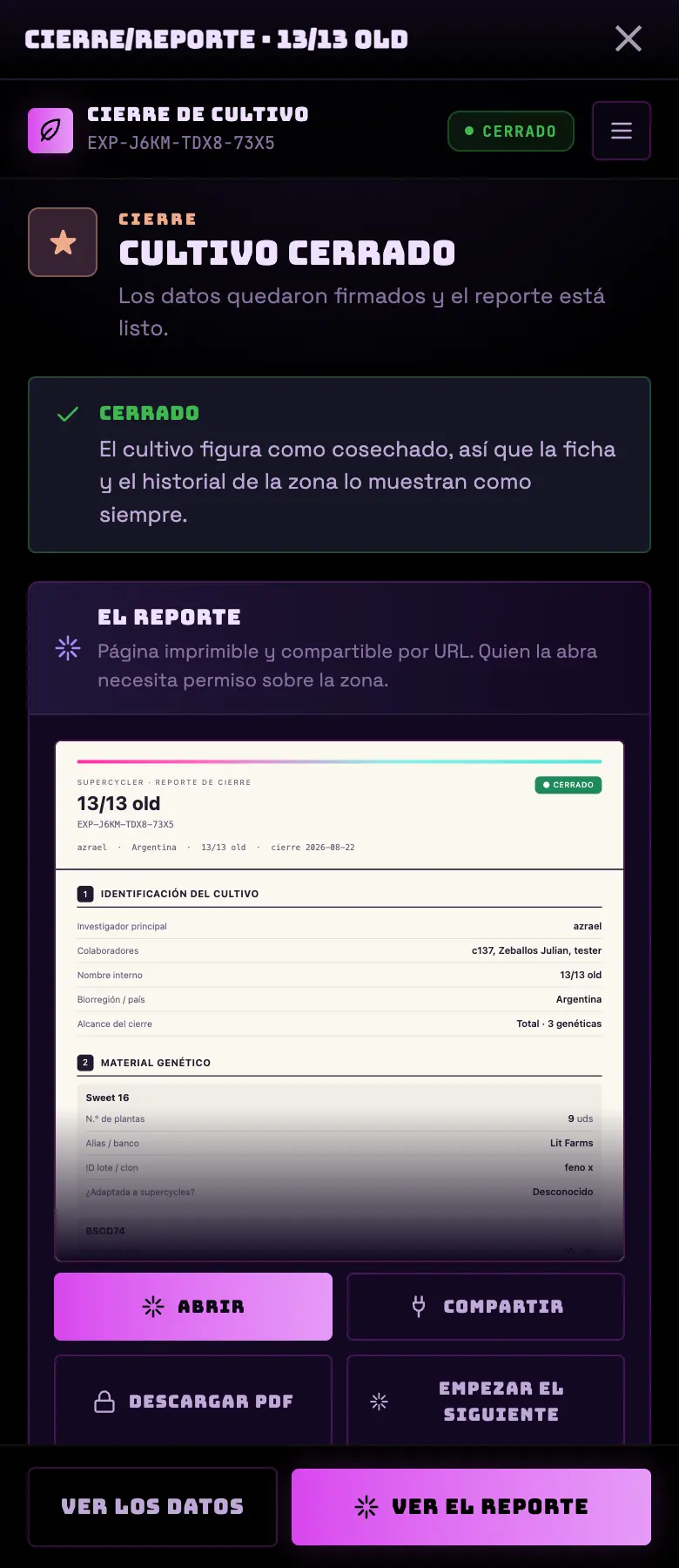
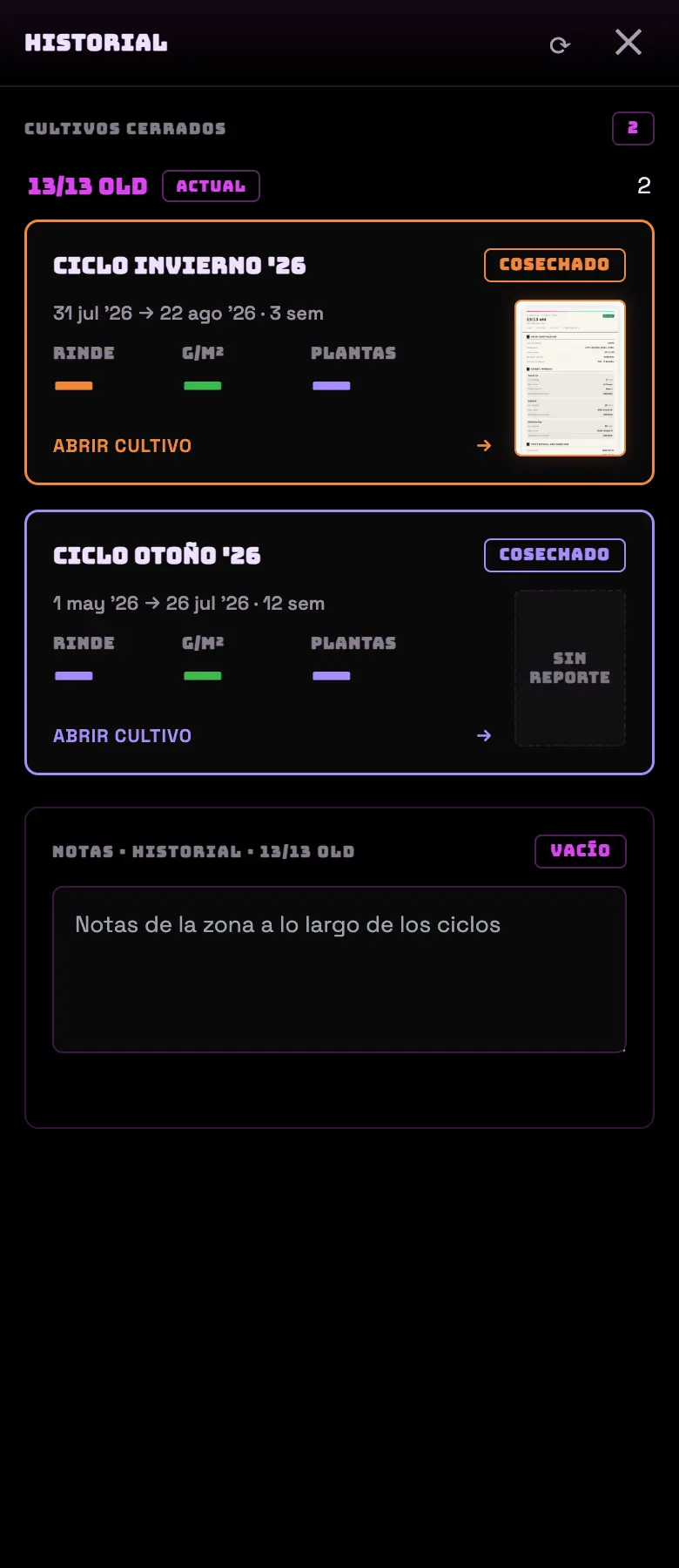
When you harvest, you close the cycle and you are left with a record that stays forever: the whole cycle's climate frozen, the yield, the genetics and the length in days and in supercycles. It is what makes the next grow start out knowing something.
The steps, grouped
| Phase | What you fill in |
|---|---|
| Identify | What you grew and with which genetics. Almost all of it autofills with what you already entered. |
| Time | Time protocol, transition and the supercycle you actually ran — with the drift measured, not the one you declared. |
| Environment | Measured environmental variables, substrate and root zone, crop management and actual watering. |
| Results | Phenology, yield and biomass (with g/m² and the deviation against the declared total), quality and sensory, phenotypes and anomalies. |
| Interpretation | How closely you followed the plan and where you drifted, the comparison, the Eyes photos with their day, and the closing write-up Brain writes for you from the measured data. |
| Closeout | Generate the report. It is kept with an identifier, a date and a fingerprint. |
- Closing is by batch: you can close some genetics and leave others standing.
- You can edit it again: closing is not throwing away the key.
- From the last step you start the next cycle, which leaves the zone clean without deleting the history.
Do this
Close the cycle even if the harvest came out badly. The record of a bad grow is the only one that later explains why.
Avoid this
Do not start the next cycle without closing the previous one. The new one's metrics start out contaminated with the old data.
How urgent it is
EssentialNothing: only once you harvest.
ImportantClose the cycle when you harvest.
OptionalFill in the whole scientific report.